




Anyone who has trudged uphill for hours with a heavy backpack knows: every kilo counts. Lightweight hiking gear often determines whether a tour becomes a pleasure or an ordeal. In this article, we show you how to significantly reduce your trekking luggage – without sacrificing comfort, safety, or essential equipment.
Why weight reduction makes sense for trekking
Anyone who has ever undertaken a multi-day hike knows how quickly a backpack's weight becomes a burden. The heavier your equipment, the more energy each meter of elevation gain costs. This not only leads to faster fatigue but can also strain your joints, knees, and spine over time.
That's why you should consistently opt for lightweight gear. Every gram saved makes the climb easier and ensures you complete the tour more relaxed and energized. Plus, you'll have more energy for the beautiful moments along the way: photography, enjoying breaks, or simply letting nature work its magic.
First steps to equipment optimization
The first step to lightweight hiking gear is an honest inventory. Lay out everything you want to take and ask yourself for each item: "Do I really need this?" If the answer is "no," leave it at home.
In the second step, examine the weight of each individual piece of equipment. Often, there are significantly lighter alternatives that involve hardly any compromises in functionality – in fact, modern materials are often even more robust and durable.
Lightweight clothing: Merino underwear as a base layer
A prime example of functional and lightweight hiking gear is merino underwear. The natural fiber is comfortable against the skin, regulates temperature, and dries much faster than cotton. This means: you can get by with fewer changes of clothes.
Merino wool is also naturally odor-resistant and doesn't need to be washed as frequently – ideal for multi-day tours. Read more about the special properties of the fiber in our overview of merino wool and its benefits. To keep your underwear lightweight and functional for years, it's also worth checking out our guide to properly washing and caring for merino wool.
Invest in fewer, high-quality pieces instead – for example, merino functional underwear as a base layer. This saves space and weight in your backpack and pays off over many tours.
Lightweight sleeping gear: Down sleeping bag and sleeping pad
You can also save enormous weight with sleeping equipment. Instead of heavy synthetic sleeping bags, a lightweight down sleeping bag is recommended. Down offers an excellent ratio of warmth to weight and compresses to an extremely small size. Our guide to ultralight down sleeping bags explains what really matters when purchasing.
Pay attention to:
- Temperature rating: appropriate for the season and elevation
- Fill weight and loft of the down
- Pack size and compression bag
- Total weight – every gram counts
A good pad underneath is equally important. Instead of heavy foam mats, opt for an inflatable version. Ultralight sleeping pads combine low weight with surprisingly good sleeping comfort and solid insulation. If you sleep on your side, our article on the best sleeping pad for side sleepers offers concrete recommendations.
Lightweight hiking accessories: Carbon trekking poles and smart backpack
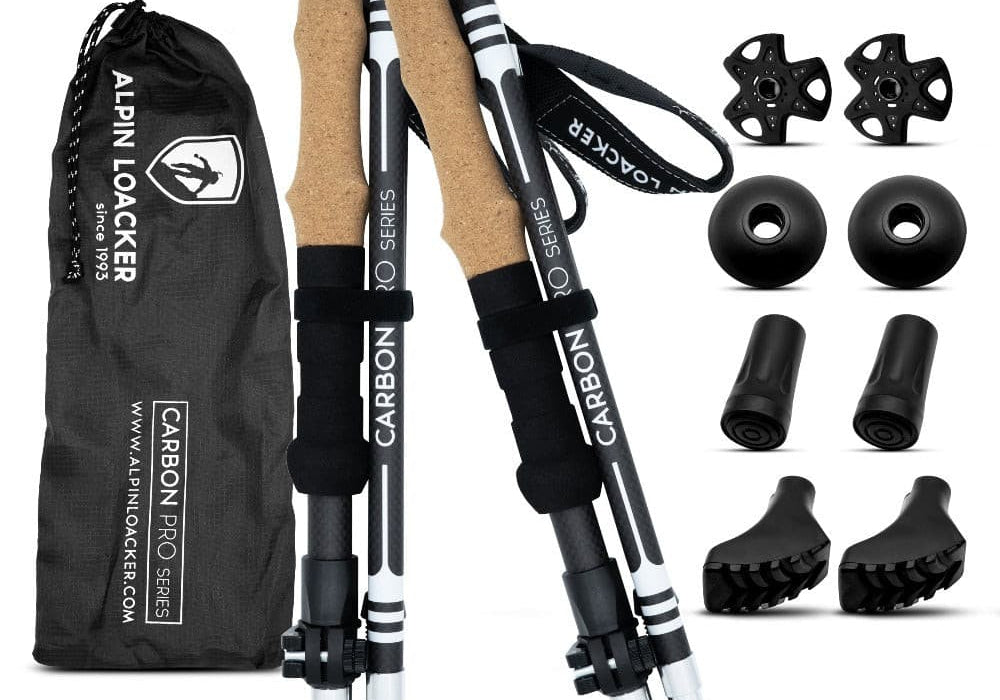
Another example of consistently lightweight hiking gear is carbon trekking poles. They are significantly lighter than aluminum or steel models without sacrificing stability. Our trekking poles test: carbon vs. aluminum shows which option suits you best. For demanding multi-day hikes, it's particularly worth taking a closer look at carbon trekking poles for long treks.
Carbon poles are usually telescopic and can be stored space-efficiently once the terrain flattens out. Alternatively, foldable trekking poles offer an even smaller pack size – ideal if your backpack is already full.
Speaking of backpacks: the suspension system itself is often a hidden weight culprit. A well-thought-out ultralight 40-liter backpack offers enough volume for multi-day tours but weighs noticeably less than classic trekking backpacks. Look for:
- Frameless or lightweight frame construction
- Reduced but functional exterior pockets
- Durable, lightweight material such as ripstop nylon
- Well-fitting hip belt for load transfer
FAQ: Lightweight hiking gear
How much should my backpack weigh for trekking at most?
As a rule of thumb: the total weight of your packed backpack should not exceed 20% of your body weight. Those who consistently use lightweight hiking gear often stay well below this – protecting joints and endurance on long stages.
Is expensive ultralight equipment really worth it?
Yes, especially for sleeping bags, sleeping pads, backpacks, and clothing. These four areas offer the greatest weight-saving potential. High-quality materials like down, merino wool, and carbon are more expensive to purchase but, with proper care, last many years and often reduce weight by several kilograms.
What should I pay special attention to when packing?
Pack heavier items as close to your body as possible and at shoulder height – this improves balance. Avoid duplicate equipment, reduce changes of clothes to the essentials, and opt for multifunctional items. This way, your backpack stays pleasantly light even after days on the trail.