



You love your merino functional underwear and wonder why some pieces suddenly fit differently or whether merino wool gets bigger after washing or smaller? Don't worry – with proper care, your favorite pieces will stay in shape for a long time. In this complete guide, we'll show you how to wash merino wool gently, dry it properly, and cleverly refresh it between washes without losing quality.
What makes merino wool so special?
Merino wool combines the positive properties of synthetics and classic wool in a single fiber. It feels pleasantly soft on the skin, doesn't itch, cools in summer and keeps you warm in winter. This makes it the perfect all-rounder for any outdoor activity – whether hiking, ski touring or trail running. If you'd like to dive deeper into the topic, you'll find a comprehensive overview in our article on the properties and benefits of merino wool.
Outstanding properties include:
- Odor neutrality: Merino wool barely absorbs odors – even after several days on the trail.
- Temperature regulation: It keeps you warm when it's cold and cools you down in heat.
- Moisture management: It barely stores sweat and releases moisture quickly.
- Sustainability: As a natural fiber, it requires no crude oil in production.
- Low maintenance: Compared to conventional wool, it's much easier to handle.
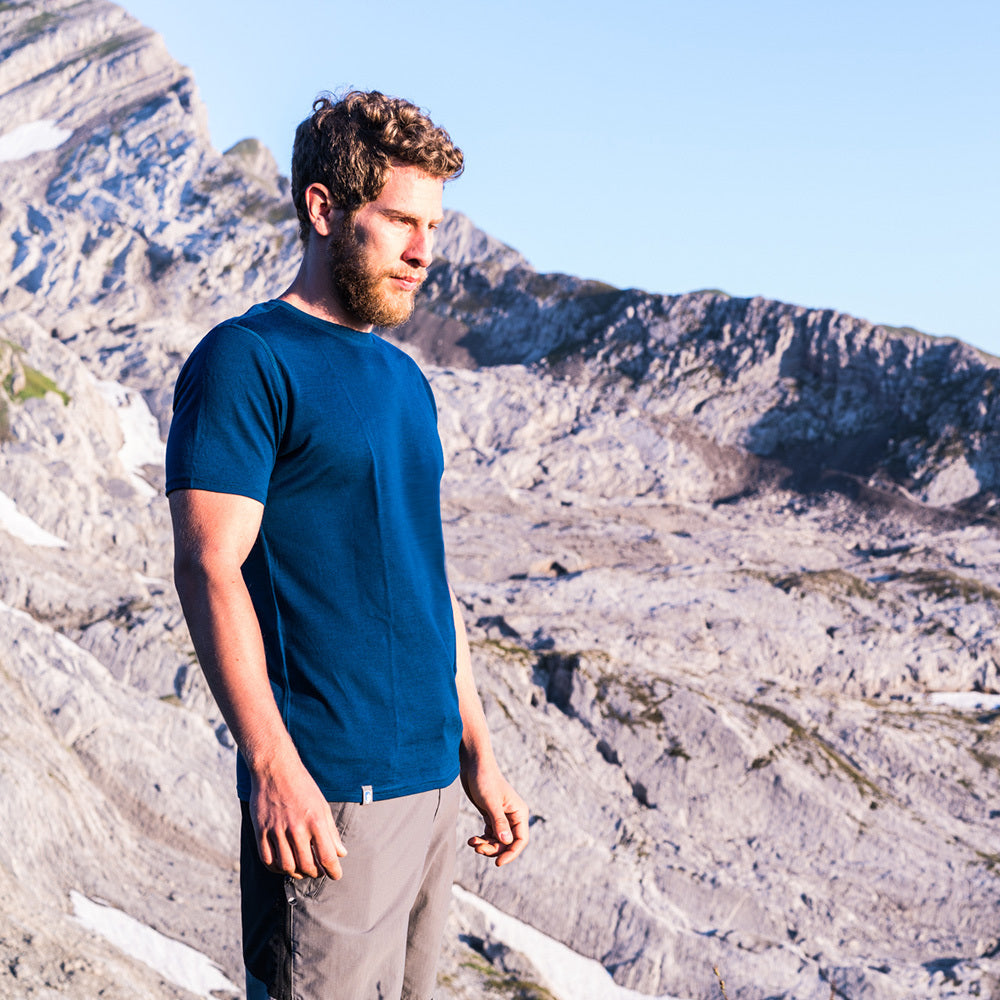
Our merino functional shirts and base layers at Alpin Loacker harness these exact properties to reliably accompany you on every adventure. Particularly popular is our merino functional underwear for men as a reliable base layer.
Washing merino wool: How to do it right
When washing merino wool, less is more. Since the fiber is naturally self-cleaning and odor-neutral, you'll need to wash it much less often than cotton or synthetic pieces. Often it's enough to simply air out your merino shirt well after a tour.
When washing is needed, follow these steps:
- Temperature: Wash at a maximum of 30 °C in a wool or gentle wash cycle.
- Detergent: Use a mild wool detergent without enzymes and without bleach.
- Spin: Reduce the spin cycle to a maximum of 600 RPM to protect the fibers.
- Turn inside out: This preserves prints and colors longer.
- No fabric softener: This destroys the natural properties of the wool.
Individual products may vary slightly in their care instructions – it's always worth checking the label. You'll find more tips in our comprehensive care guide for merino wool.
Does merino wool get bigger or smaller after washing?
One of the most common questions is: Can merino wool get bigger after washing? In fact, this can happen if you handle the wet garment incorrectly. If you hang it up soaking wet, the heavy water stretches the fine fibers lengthwise – the shirt will look stretched out afterward. Even wringing it too hard or drying it on a hanger can distort the shape.
Conversely, merino wool can also shrink if exposed to too high temperatures or in the dryer. To find out what to do if this happens, check out our article Merino wool shrunk – what to do if clothing gets smaller after washing. Here's how to dry merino wool properly:
- Gently squeeze the wet garment in a towel – don't wring it!
- Lay it flat on a drying rack or towel to dry.
- Avoid direct sunlight and heat from radiators.
- Don't hang it up soaking wet, as the heavy water stretches the fibers.
For storage: fold in your closet, not on hangers, to prevent stretching. For longer summer breaks, you can use cedar wood or lavender sachets for protection against moths. If you'd like to learn more about common causes of shape loss, you'll find valuable tips in our article preventing causes and caring properly.
Remove stains and odors without washing merino wool
Since you should rarely wash merino wool, clever tricks for in-between care are invaluable. For minor stains or light odors, simple household remedies often do the trick:
- Air out: Hang your merino shirt outside or on the balcony overnight after a tour.
- Damp cloth: Spot stains can often be dabbed away with a damp cloth and a bit of wool detergent.
- Freezer trick: Place the shirt in a bag in the freezer for a few hours – this kills odor-causing bacteria.
- Steam: Hang the garment in the bathroom when you shower. The steam smooths fibers and neutralizes light odors.
This keeps your Alpin Loacker merino functional clothing fresher longer without constantly putting it in the washing machine. The same applies to merino socks, which also benefit from the fiber's natural self-cleaning properties.
FAQ: Frequently asked questions about merino care
Does merino wool really get bigger after washing?
Yes, it can – but not from washing itself, rather from improper drying. If you hang merino wool soaking wet or drape it over a hanger, you risk the fibers stretching lengthwise from the weight of the water. Drying it flat is therefore the safest method.
How often should I wash my merino shirt?
Much less often than you might think. Thanks to its natural odor-neutrality, it's often enough to wash the shirt after several tours just once. In between, airing it out usually keeps it fresh enough.
Can merino wool go in the dryer?
No. The heat in the dryer can mat the fine fibers and permanently shrink the garment. Always dry your merino pieces flat in the air, away from heaters and direct sunlight.
With these tips, you'll enjoy your merino clothing for a long time – whether on ski tours, trail running, or in everyday life. Proper care isn't complicated, just a matter of a few simple routines.
Merino clothing that gets better with time
Alpin Loacker merino wool — properly cared for, it lasts for years.
30-day return policy · Free shipping from €50
Ich habe ein alpinloacker Shirt und bin begeistert. Kaufe jetzt für meinen Mann auch eines.