










Frozen paths, slippery snow, and steep climbs demand more stability when hiking. This is exactly where telescopic hiking poles come in handy when used correctly. Many outdoor enthusiasts use poles only as extra support. With the right technique, folding hiking poles also provide better balance, relieve joints, and improve efficiency on the trail.
Setting the correct pole length
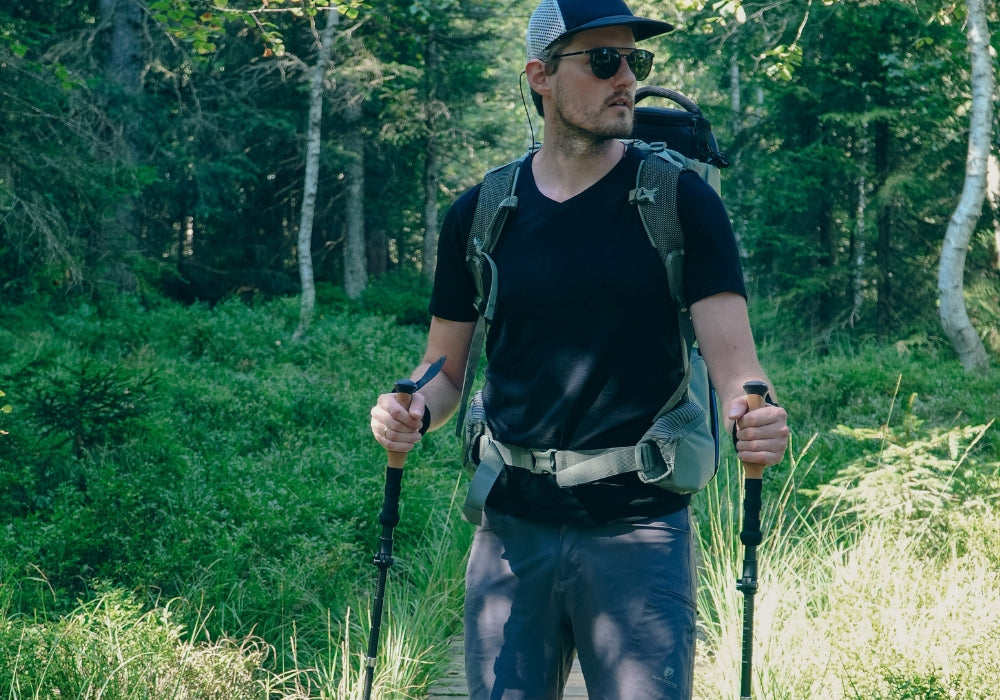
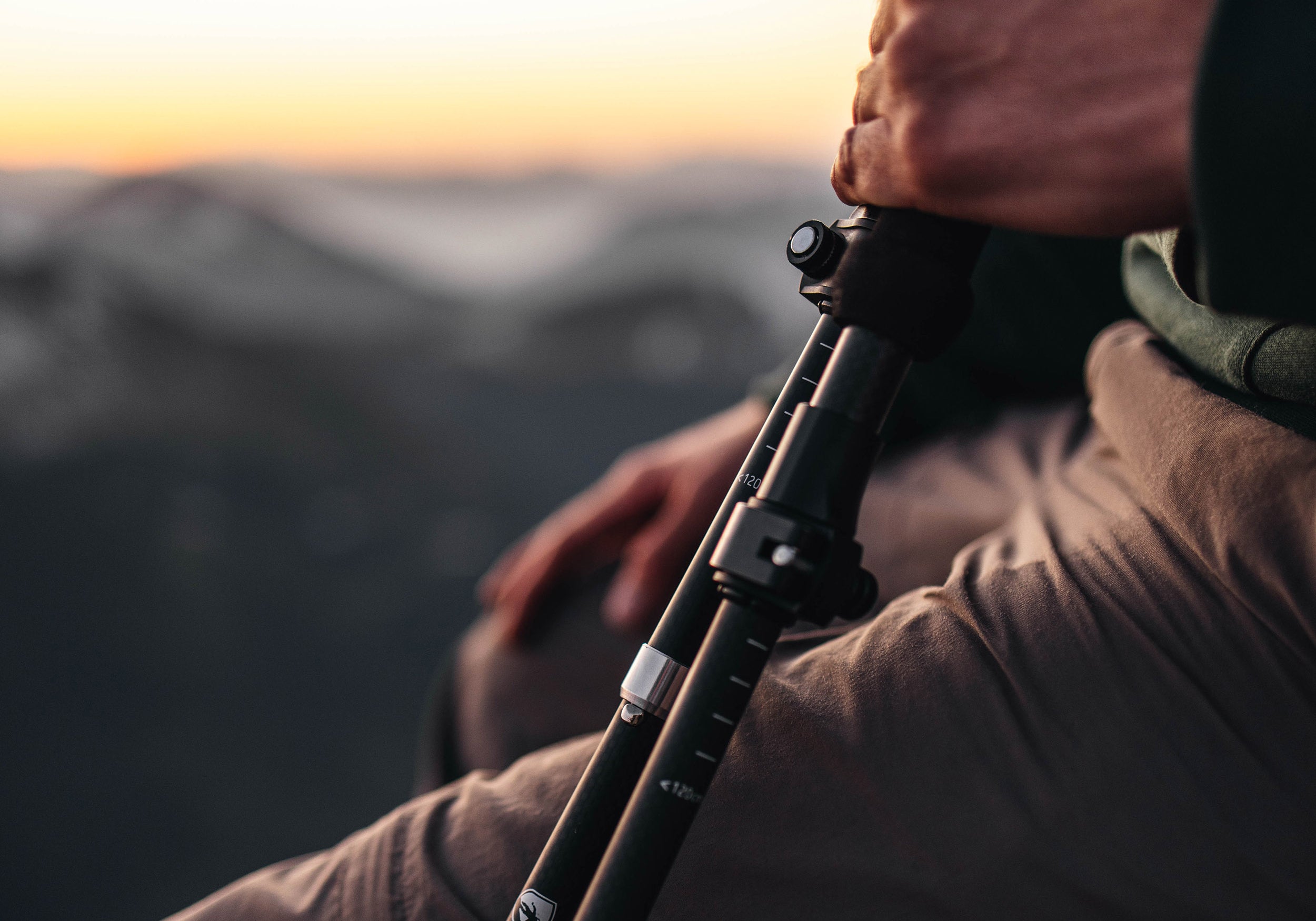
The correct length is the first step to good technique. Adjust the poles so that your elbow forms about a 90-degree angle when the tip touches the ground.
For steep climbs, the pole can be set a bit shorter. This makes pushing forward easier. When going downhill, a slightly longer setting helps stabilize your balance.
Telescopic hiking poles can be adjusted quickly. This flexibility is especially important in winter, as terrain conditions often change.
Using wrist straps correctly
Many hikers only hold the pole by the grip, leaving the wrist strap unused. This causes a loss of power.
Slide your hand up from below through the strap and then grip the handle. This way, the pressure is distributed evenly. The strap takes on part of the load.
This technique relieves fingers and wrists on long tours.
Walking rhythm
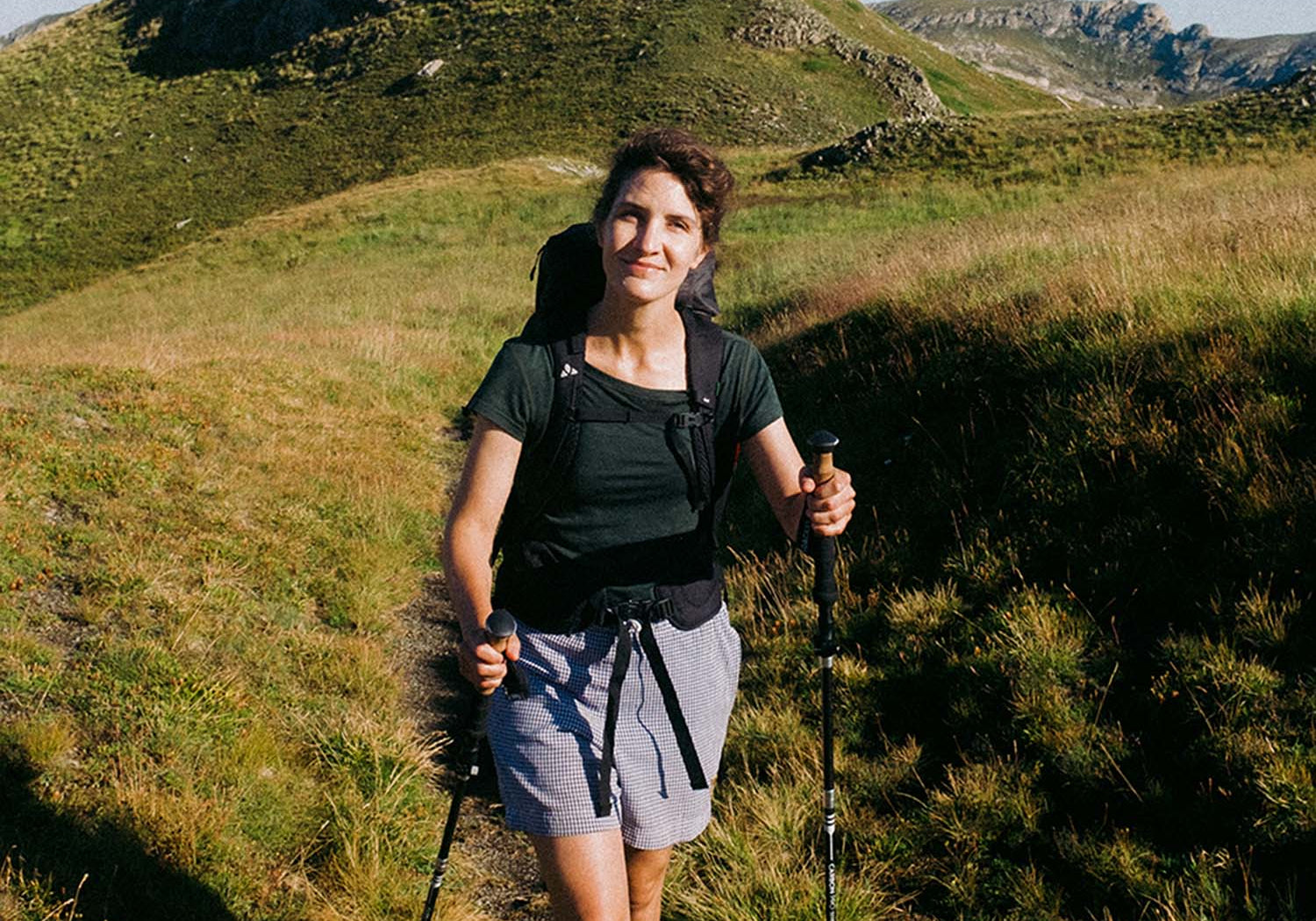
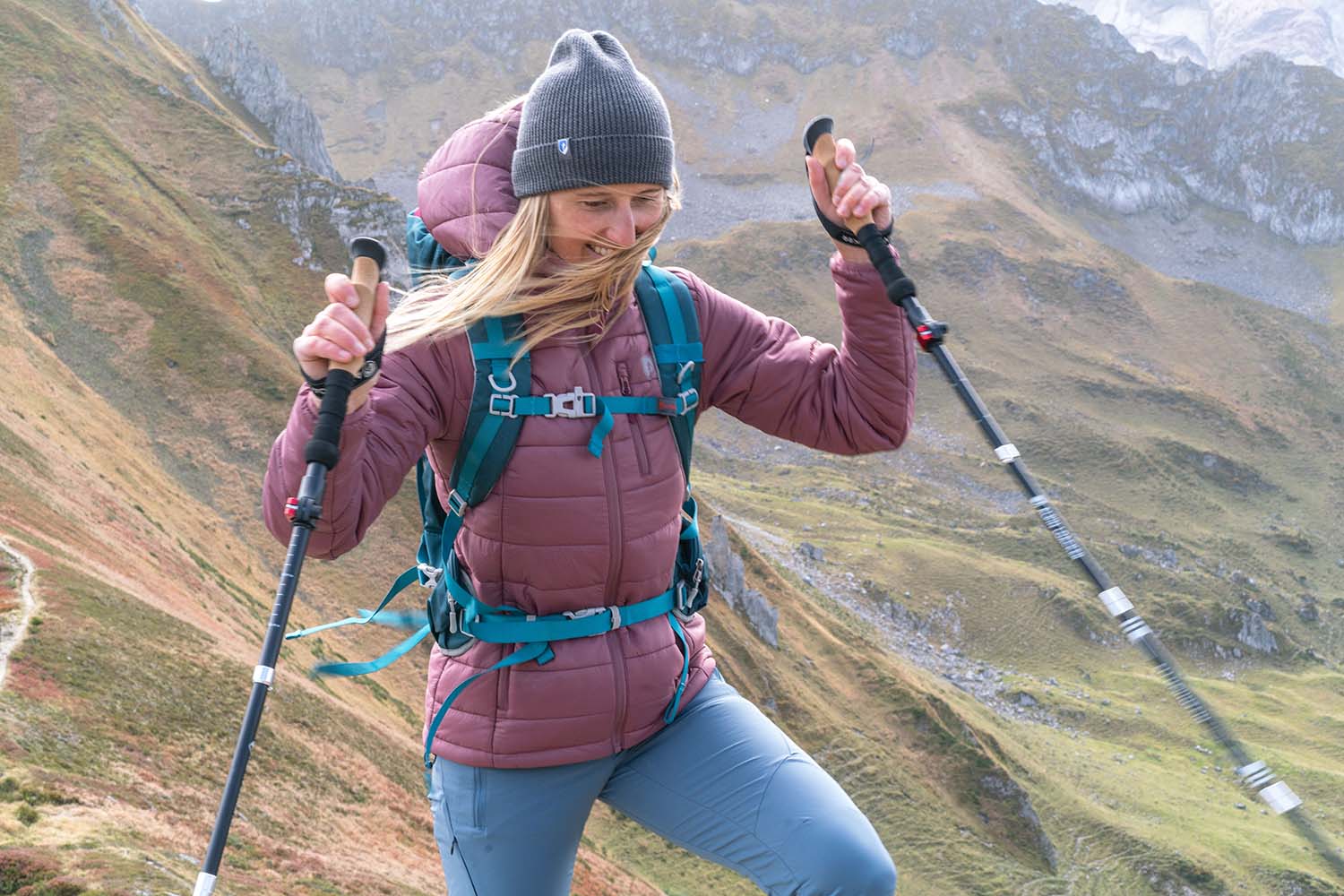
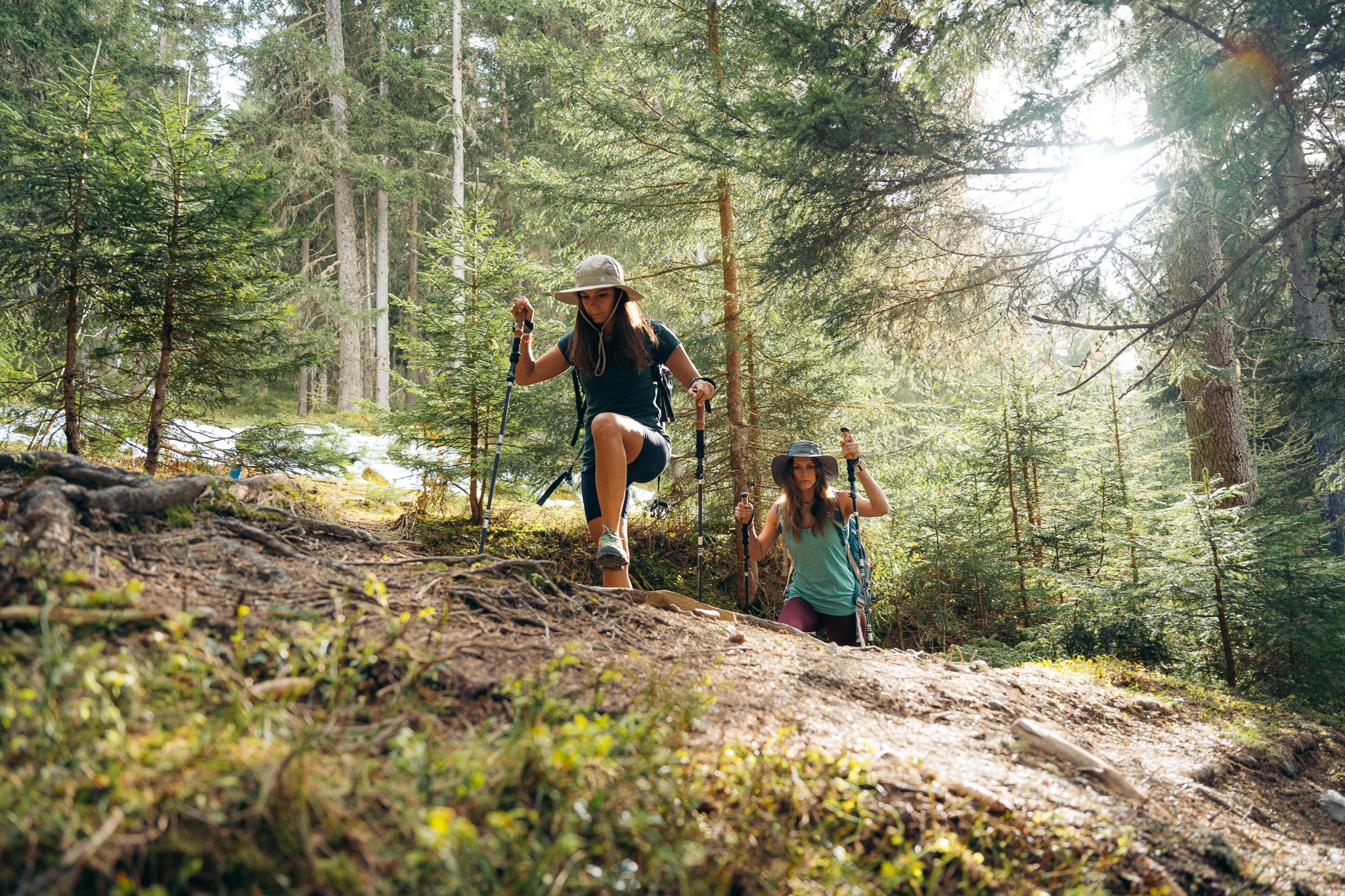
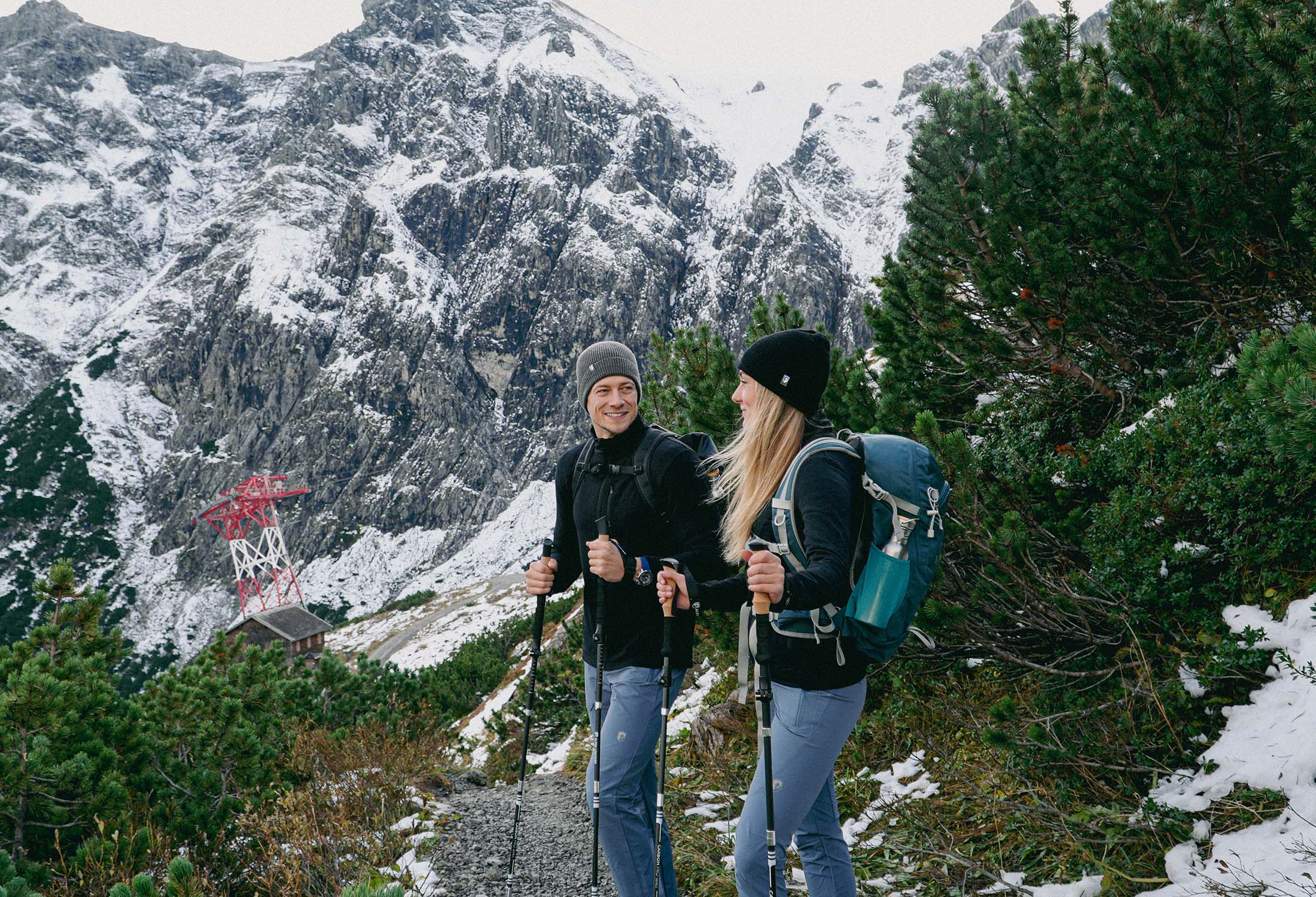
Good movement technique improves stability. Plant the right pole at the same time as your left foot. Then follow with the left pole and right foot.
This diagonal rhythm ensures smooth movement. The body stays stable and balance improves.
On snow or ice, you can place the pole slightly ahead of your foot. This provides extra security.
Applying pressure correctly
Hiking poles are more than just a balance tool. They support your forward momentum.
When climbing, plant the pole slightly behind your body. Push yourself actively forward. This relieves your legs and knees.
When going downhill, the poles act as an additional brake. Plant them a bit further ahead and shift your weight in a controlled way.
Adjusting tips to the surface
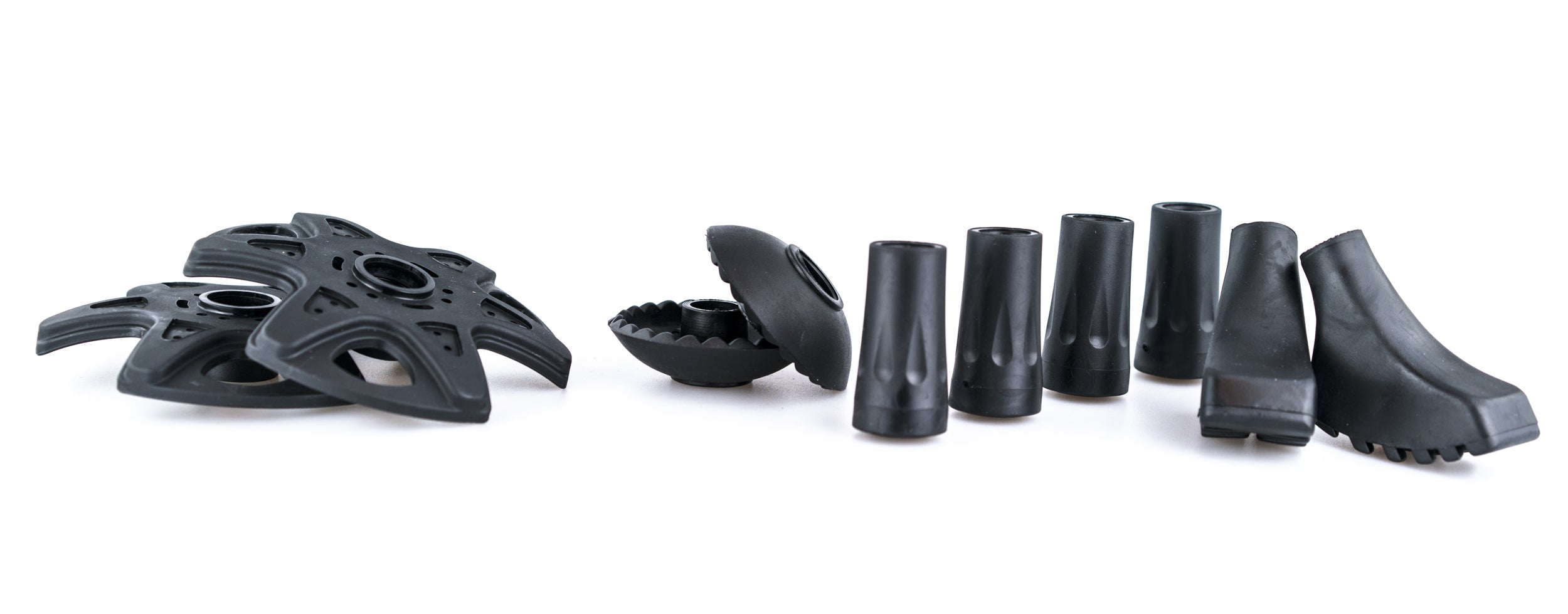
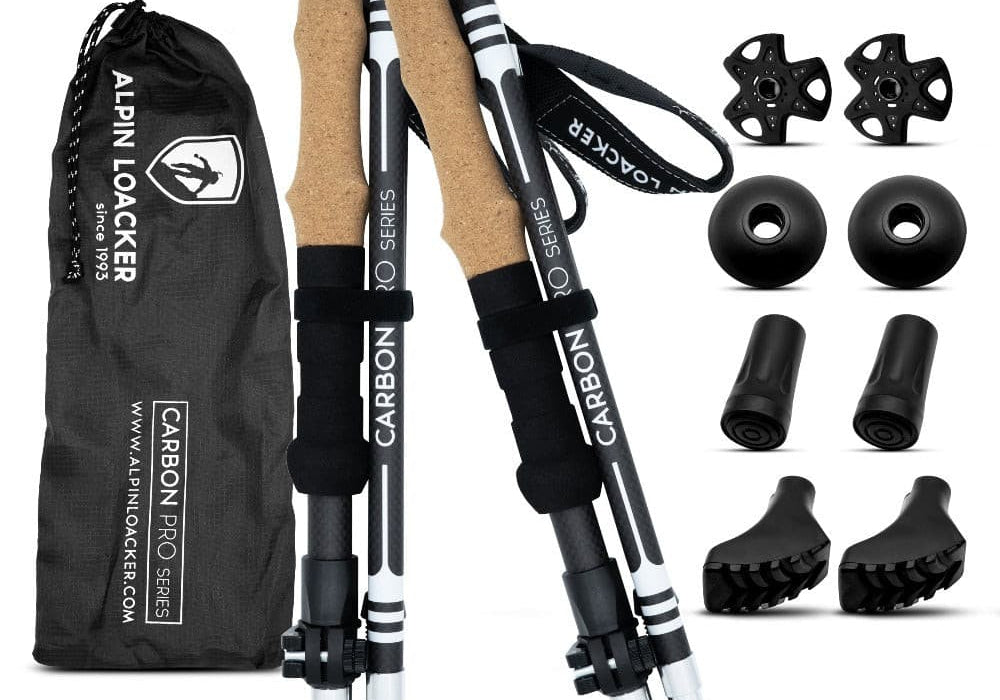
The surface determines which tips are suitable. Carbide tips grip well in soil, ice, or snow.
For asphalt or rocky paths, rubber tips are ideal. They reduce noise and prevent slipping on smooth surfaces.
In winter, larger baskets help prevent the pole from sinking too deep into soft snow.
Advantages of folding hiking poles
Many outdoor fans choose folding hiking poles because of their compact packing size. Folded up, they fit easily on your backpack.
These models can be set up and packed away quickly. This can be a big advantage on changing terrain.
Alpin Loacker develops folding and telescopic models that remain lightweight and stable.
Saving energy through proper technique
Properly used hiking poles distribute the load between arms and legs. This reduces pressure on knees and hips.
This is especially important in winter. Slippery paths require more control. Poles stabilize the body and reduce the risk of falls.
On long tours, this support helps save energy.
Care and inspection
After winter tours, poles should be cleaned. Snow, salt, and moisture can damage the material over time.
Regularly check the locks of your telescopic hiking poles. They must remain stable so the length doesn’t change.
Also inspect the tips and baskets.
Conclusion
Using hiking poles correctly improves stability, efficiency, and safety on winter tours. With the right length, good rhythm, and active use of your arms, telescopic hiking poles become an essential tool on the trail. Compact folding hiking poles also make transport easier. With high-quality models from Alpin Loacker, you’ll stay stable and in control even in the coldest months.