


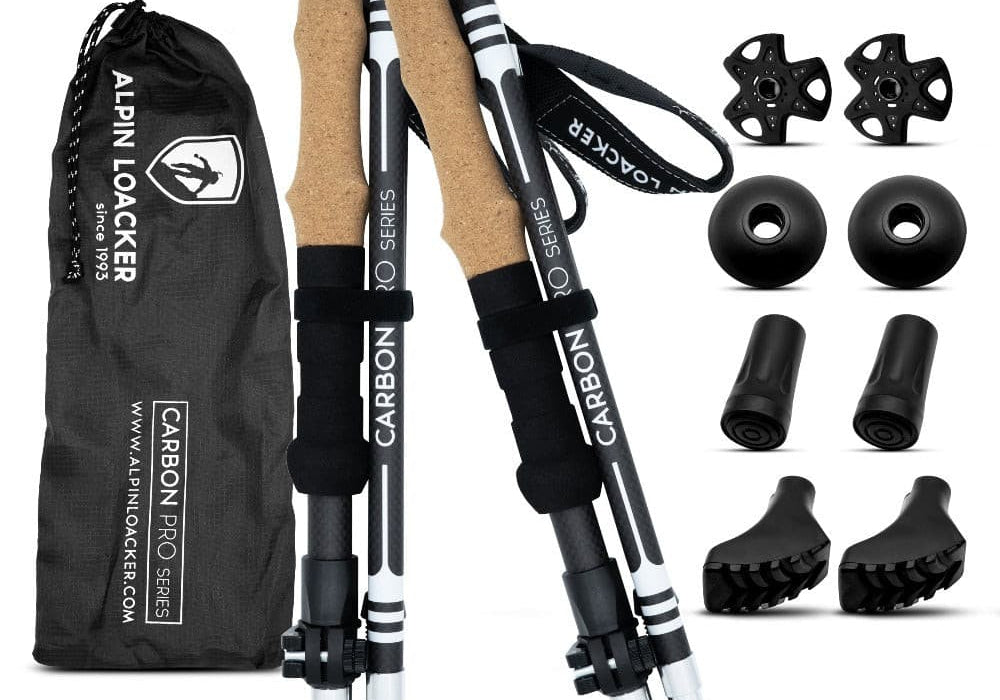


Anyone who hikes in the mountains, forests, or on long-distance trails knows: good equipment makes the difference between comfort and safety. Trekking poles in particular are a loyal companion that provides stability and relief. But not everyone wants to carry bulky models around. This is exactly where the modern solution comes in: Discover collapsible trekking poles – lightweight, stable, and practical sticks for outdoor adventures are the ideal choice for those who want to stay flexible. Whether trekking, hiking, or backpacking – a collapsible trekking pole combines lightness, stability, and compact packability in one product.
Why collapsible trekking poles are so popular
In recent years, collapsible models have clearly prevailed over traditional, rigid trekking poles. The reason is simple: they combine all the advantages of conventional poles with a space-saving design. Once folded up, they fit easily into any backpack or can be attached to the side of your gear. Especially for people who like to travel or want to keep their equipment minimalist, they are indispensable.
Particularly in situations where the poles are not constantly needed – such as when climbing over rocky sections or taking photos – it makes sense to stow them quickly. With a collapsible trekking pole, that's no problem since it can be opened or folded up in just a few seconds. For those seeking compact models for the cold season, the article Collapsible trekking poles – ideal for winter hikes and compact backpacking trips offers further practical tips.
Lightness meets stability
A main argument for collapsible trekking poles is their lightweight design. Modern models are usually made from aluminum or carbon – two materials with a perfect ratio of weight to stability. A pair often weighs less than 500 grams and is barely noticeable in your pack.
But lightweight doesn't mean unstable: high-quality poles offer the same support as rigid versions. They relieve strain on knees and joints when descending, provide additional safety on rough terrain, and ensure steady pace on long distances. The detailed Trekking poles test 2026: carbon vs. aluminum shows which material suits you best. Those seeking maximum performance should check out carbon trekking poles and their perfect balance of lightness and durability.
Practical benefits for outdoor adventures
Whether day hikes, alpine crossings, or pilgrimage routes – those who discover collapsible trekking poles benefit from numerous practical advantages:
- Space-saving in your backpack: When folded up, they fit into almost any daypack.
- Flexibly deployable: Quickly set up when terrain becomes more challenging.
- Travel-friendly: Ideal for flights or backpacking trips as they are easy to transport.
- Individually adjustable: Many models can be adjusted in length and adapt to your height and terrain.
- Universally usable: Whether hiking, trail running, trekking, or snowshoeing – collapsible trekking poles are versatile.
Those who value flexibility and comfort will quickly appreciate the advantages – especially on multi-day tours where every gram in the backpack counts.
What to look for when buying
When choosing the right collapsible trekking poles, there are some points to consider:
- Material: Carbon is extremely light and stiff, aluminum is slightly heavier but more robust against impacts.
- Grip: Ergonomic grips made of cork or foam prevent blisters and provide comfortable handling on long tours.
- Adjustability: The length should be easily adjustable to terrain and body height.
- Pack size: The smaller the pack size, the easier the poles are to stow.
- Tips: Steel or hard metal tips provide grip on rocks, while rubber buffers make use on asphalt more comfortable.
A helpful overview of which tip suits which terrain can be found in the article on trekking poles and choosing the right tip for each terrain. This way you'll discover step by step the perfect model for your outdoor adventures. Alpin Loacker carbon poles also offer a well-thought-out package of weight, stability, and user comfort.
Tips for proper use
For collapsible trekking poles to achieve their full effect, proper technique is worthwhile. On flat terrain, your arms should form a 90-degree angle. Uphill, the poles can be slightly shorter; downhill, slightly longer. Use the poles rhythmically and alternating with your legs – this relieves joint strain and provides more efficient walking. Those wanting to deepen their technique will find a detailed guide in the article How to use trekking poles properly – start safely into the 2026 outdoor season.
Frequently asked questions about collapsible trekking poles
Are collapsible trekking poles as stable as telescopic poles?
Yes, modern collapsible models made from carbon or aluminum offer the same stability as classic telescopic poles. The decisive advantage lies in significantly smaller pack size and easier handling in the field.
For whom are collapsible trekking poles especially worthwhile?
Especially for backpackers, travelers, trail runners, and anyone who wants to keep their equipment minimalist. On multi-day tours where the poles aren't needed continuously, collapsible models are the most practical solution.
Carbon or aluminum – which is the better choice?
Carbon is lighter and stiffer, ideal for long tours and ambitious hikers. Aluminum is more robust against impacts and usually more affordable. For long trekking tours and steep climbs, it's worth checking out carbon trekking poles for long treks.