

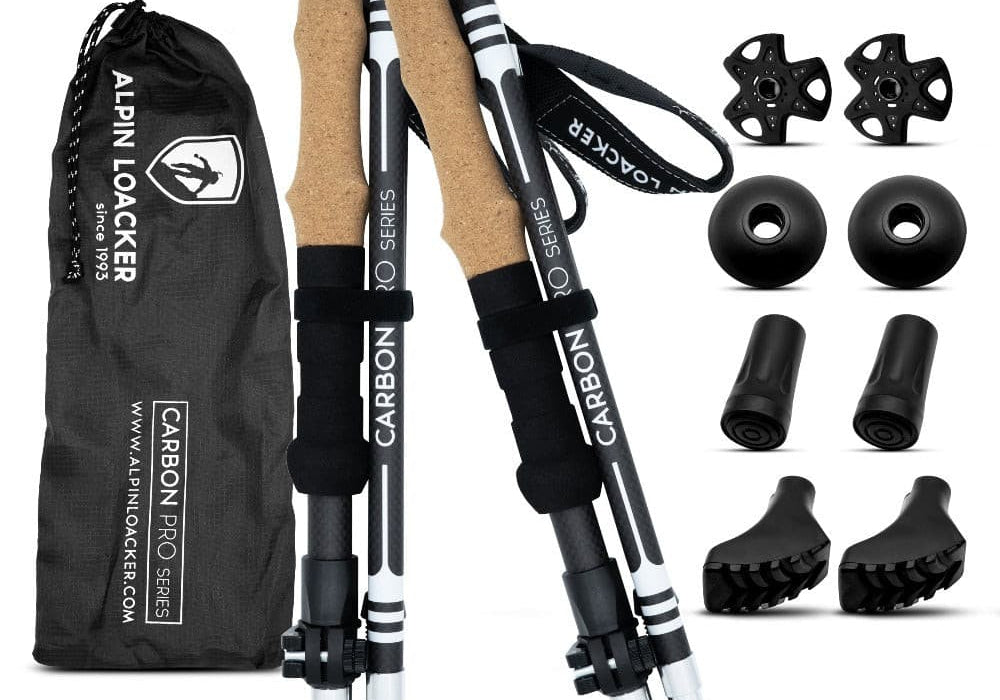


Telescopic Carbon Trekking Poles are the ideal choice for anyone who values low weight, high stability, and maximum comfort on the trail. Whether on a relaxed day hike, a multi-day trekking tour, or mountaineering – the right gear makes all the difference for comfort and safety. Along with quality hiking boots and a suitable backpack, carbon trekking poles are among the most important companions. They provide stability, protect your joints, and noticeably ease walking on uneven terrain. In this article, we take a detailed look at the benefits of carbon trekking poles, why they often outperform aluminum poles, and what to consider when buying. We also examine practical variants like foldable models in detail.
Why Telescopic Carbon Trekking Poles Are the Better Choice
Carbon is a modern high-tech material known for its unique combination of lightness and stability. Compared to aluminum, which is also commonly used for trekking poles, carbon offers decisive advantages. If you want to compare both materials directly, you'll find a comprehensive overview in our comprehensive trekking poles test 2026 on carbon vs. aluminum.
Ultralight
Carbon trekking poles are significantly lighter than their aluminum counterparts. On long tours, every gram saved makes a positive difference. Low weight means less strain on your arms and shoulders – this pays off especially on multi-hour hikes.
High Stability
Despite their light weight, carbon trekking poles are extremely stable. They provide reliable support on steep climbs, descents, and uneven terrain. Our article on carbon trekking poles for long trekking tours and steep ascents shows how well carbon poles perform on particularly demanding sections.
Vibration Damping
Another advantage of carbon is excellent vibration damping. While aluminum poles feel harder and transfer vibrations more directly, carbon absorbs the impact and provides a more pleasant hiking experience – especially on hard, rocky terrain.
Durability
Carbon is not only robust but also resistant to corrosion. This makes carbon trekking poles perfect for use in any weather and on all terrains – from damp forest paths to dry high mountain routes.
Ergonomics for Maximum Comfort
A good pair of trekking poles should not only be stable and light, but also ergonomically designed. Grips made of cork or foam conform optimally to your hand, prevent blister formation, and reliably wick away sweat. Ergonomically shaped grips also relieve stress on the wrists, which is noticeably pleasant on longer tours.
The straps are also an important aspect: they provide additional grip and ensure you can use the poles efficiently without wasting unnecessary energy. With high-quality telescopic carbon trekking poles, the straps can be individually adjusted for optimal comfort. Learn more about choosing the right ground in our guide on which tip to choose for which terrain.
Foldable Trekking Poles – Practical and Space-Saving
In addition to classic telescopic poles, foldable trekking poles are becoming increasingly popular. These models fold into multiple segments, similar to tent poles. This makes them extremely compact and they fit easily into or onto your backpack.
Advantages of foldable trekking poles:
- Space-saving: When folded, they are significantly shorter than classic telescopic poles.
- Easy to transport: Ideal for travel when luggage space is limited.
- Quick setup and takedown: Modern folding mechanisms allow deployment in seconds.
Foldable carbon trekking poles are particularly popular with mountaineers, trail runners, and backpackers since they take up minimal space yet provide full support. If you frequently hike in cold weather, you'll find valuable tips in our article on foldable trekking poles ideal for winter hikes and compact backpack trips.
Tips for Proper Use of Telescopic Carbon Trekking Poles
To get the most out of your carbon trekking poles, proper usage is essential. Here are the most important tips:
- Set correct pole length: Your elbows should form approximately a 90-degree angle when gripping the poles.
- Adjust length for terrain: Set slightly shorter for uphills, slightly longer for descents.
- Attach straps correctly: Grip the strap from below so your wrist is optimally relieved.
- Rhythmic walking: Use the poles in alternation with your legs – this protects joints and saves energy.
Detailed instructions on technique can be found in our guide How to use trekking poles correctly – start safely into your outdoor season 2026. If you also hike in winter, you'll find additional technique tips for cold months in our blog.
FAQ – Frequently Asked Questions About Telescopic Carbon Trekking Poles
Are Carbon Trekking Poles Really More Stable Than Aluminum Poles?
Carbon offers comparable to higher stability than aluminum with significantly less weight. Additionally, the material dampens vibrations better. With very high point loads, aluminum can be somewhat more robust, but for normal hiking use, carbon poles are absolutely reliable.
How Do I Care for My Carbon Trekking Poles Properly?
Clean the poles after every tour with clear water, pay special attention to the locks, and let the segments dry completely before pushing them together. This keeps mechanisms running smoothly and the material durable long-term.
Which Tours Are Telescopic Carbon Trekking Poles Best Suited For?
Carbon telescopic poles are versatile – from simple day hikes to alpine trekking tours to fast speed-hiking sessions. Especially on long distances, the low weight really pays off.