




Anyone who loves spending time in nature – whether hiking, mountaineering or trekking – knows how crucial the right equipment is for a successful outdoor experience. Alongside good footwear and weather-resistant clothing, trekking poles play a central role in comfort, safety and performance. Particularly noteworthy today are collapsible trekking poles compared: Why foldable trekking poles are the perfect choice for on the go, which stand out especially for their compact design and high functionality. But what makes collapsible trekking poles so popular – and for whom are they really worth it?
What are foldable trekking poles?
Foldable trekking poles are special hiking poles that divide into multiple segments and collapse into a compact format. Unlike classic telescopic poles, which are simply pushed together, foldable models can be reduced to an especially small packed size – ideal for backpacking trips, air travel or spontaneous hiking adventures. If you'd like to learn more about the differences between various materials, the Trekking Poles Test 2026: Carbon vs. Aluminium provides a comprehensive overview.
Advantages of collapsible trekking poles
Foldable models combine numerous benefits that make them a true all-rounder in the outdoor field. Here are the most important advantages at a glance:
- Compact packed size: When collapsed, the poles are extremely space-saving. They fit easily in or onto your backpack and can be taken along even when not in use. Especially on via ferratas or when transporting on public transport, this is an invaluable advantage.
- Lightweight: Many collapsible trekking poles are made from high-quality materials like carbon or aluminium, which are not only robust but especially light. This eliminates unnecessary extra weight – a real blessing on longer tours or multi-day hikes.
- Quick setup: Foldable models unfold and lock in just a few seconds – without complicated adjustments or screw mechanisms. This saves time and hassle, especially on changing terrain.
- Stability and safety: Despite their lightweight and compact construction, modern foldable trekking poles offer excellent stability. Reinforced joints and reliable locking systems provide secure grip even under heavy load.
- Flexibility on terrain: Whether rocky ascents, slippery descents or uneven ground – foldable poles relieve strain on knees and joints, improve balance and provide additional safety on challenging routes.
If you'd like to deepen your knowledge of proper pole technique, you'll find helpful tips in the article How to use trekking poles correctly.
Who are foldable trekking poles particularly suitable for?
Basically, all hikers – from beginners to experienced alpinists – benefit from the advantages that foldable trekking poles offer. However, they are particularly worthwhile for:
- Trekkers and long-distance hikers who need to watch every gram and every pack volume
- Travelers who want to transport their poles on planes or buses
- Via ferrata climbers who need to have their hands free occasionally
- Outdoor athletes who are flexible and spontaneous on the road
Especially during the cold season, when every piece of equipment in your backpack counts, compact models are an ideal choice. Read more about this in the article Foldable trekking poles – ideal for winter hikes and compact backpacking trips.
What should you look for when buying foldable trekking poles?
If you're interested in collapsible trekking poles, keep a few points in mind when purchasing to ensure long-term enjoyment of your equipment:
- Material: Carbon is especially lightweight and vibration-damping, while aluminium is more robust against impacts. If you spend a lot of time on long tours, take a look at Carbon trekking poles for long trekking tours.
- Grip: Ergonomic grips made from cork or foam offer high comfort and help prevent blistering.
- Length adjustment: Even with foldable models, pole length should be individually adjustable – ideally with a simple clip or push system.
- Weight: Pay attention to a good balance between weight and stability, especially on longer tours.
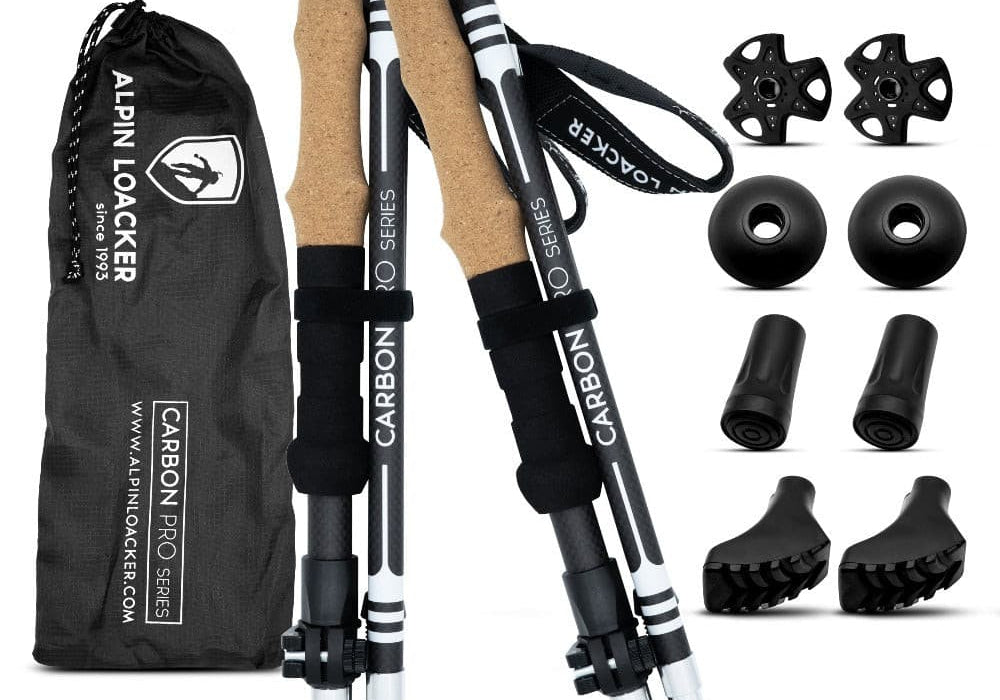
- Accessories: Baskets for snow or mud, rubber pads for asphalt or spare parts are useful extras. You'll learn which tip is suitable for which terrain in the article Trekking poles: which tip for which terrain.
Alpin Loacker trekking poles also focus on these quality features and convince with a well-balanced mix of lightness, stability and comfort – ideal for anyone who carefully selects their outdoor equipment.
Collapsible trekking poles compared – Conclusion
Foldable trekking poles are a modern, practical solution for anyone who enjoys spending time in nature. They combine functionality, comfort and mobility in an ideal way and are thus the perfect companion on hikes, trekking tours or trips. If you value low weight, compact packed size and stable workmanship, you'll quickly find the right choice with a collapsible model.
Frequently Asked Questions (FAQ)
Are foldable trekking poles as stable as telescopic poles?
Yes, modern foldable trekking poles are just as stable as telescopic models. High-quality locking systems and reinforced joints provide secure grip – even on demanding tours on rough terrain.
Which material is better: carbon or aluminium?
Carbon is significantly lighter and absorbs vibrations better, while aluminium is more robust against lateral impacts. Those who care about weight and cover longer distances are usually better off with carbon – aluminium is suitable for intensive, robust use.
Can you take foldable trekking poles on an airplane?
Foldable trekking poles are generally easy to transport in checked baggage. They are usually not allowed in carry-on luggage. However, the compact packed size makes them an ideal choice for air travel and longer backpacking trips.