

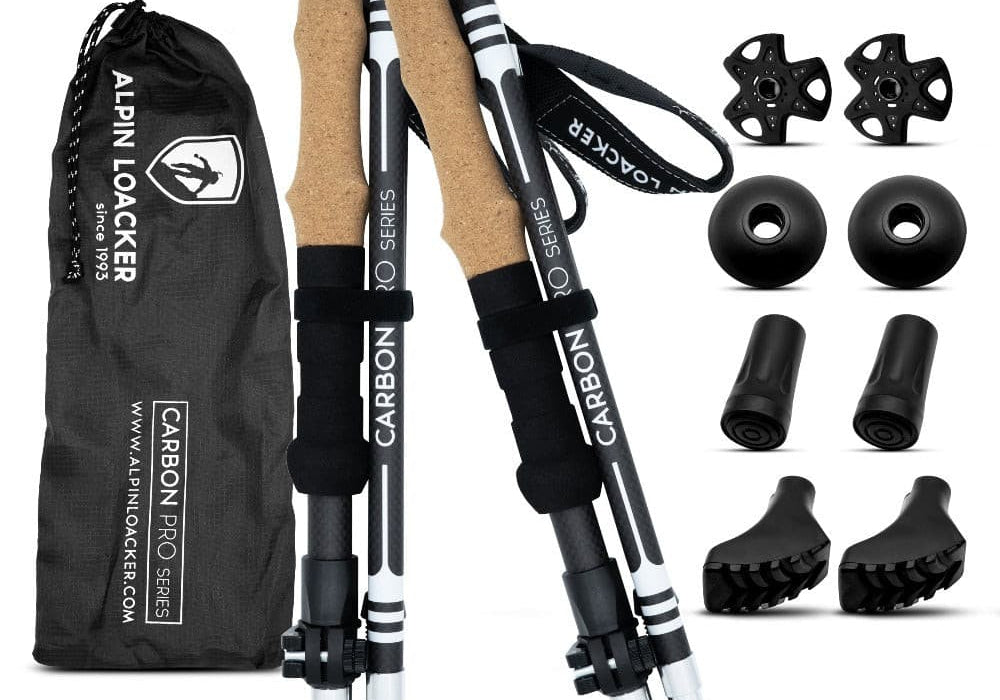


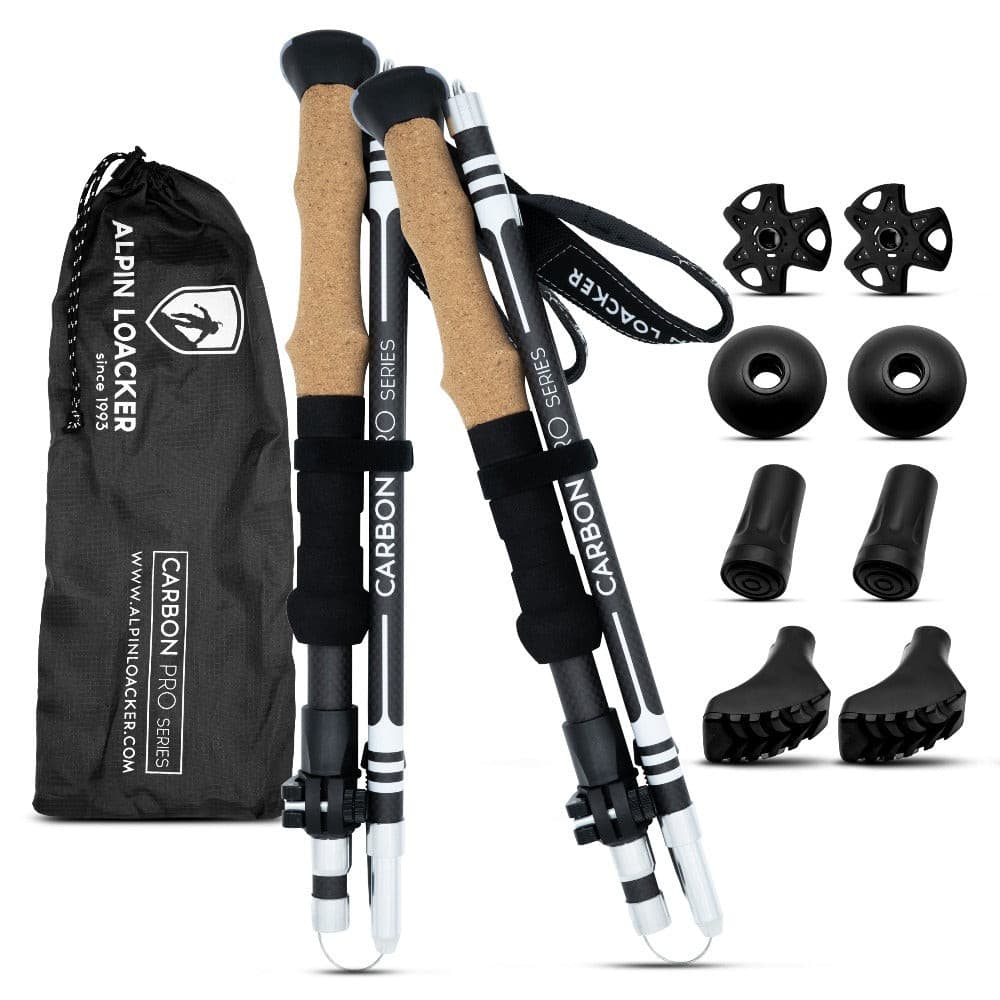

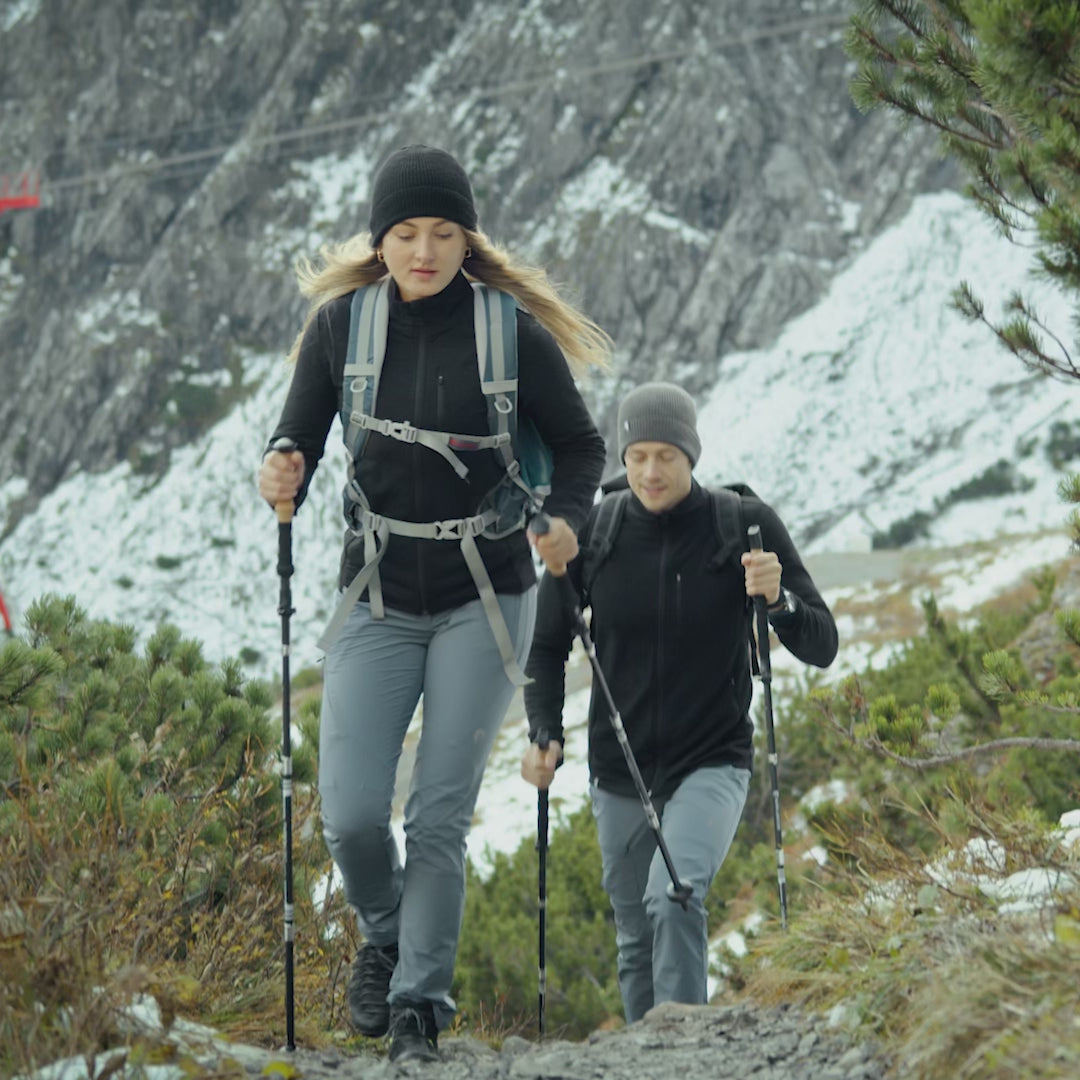
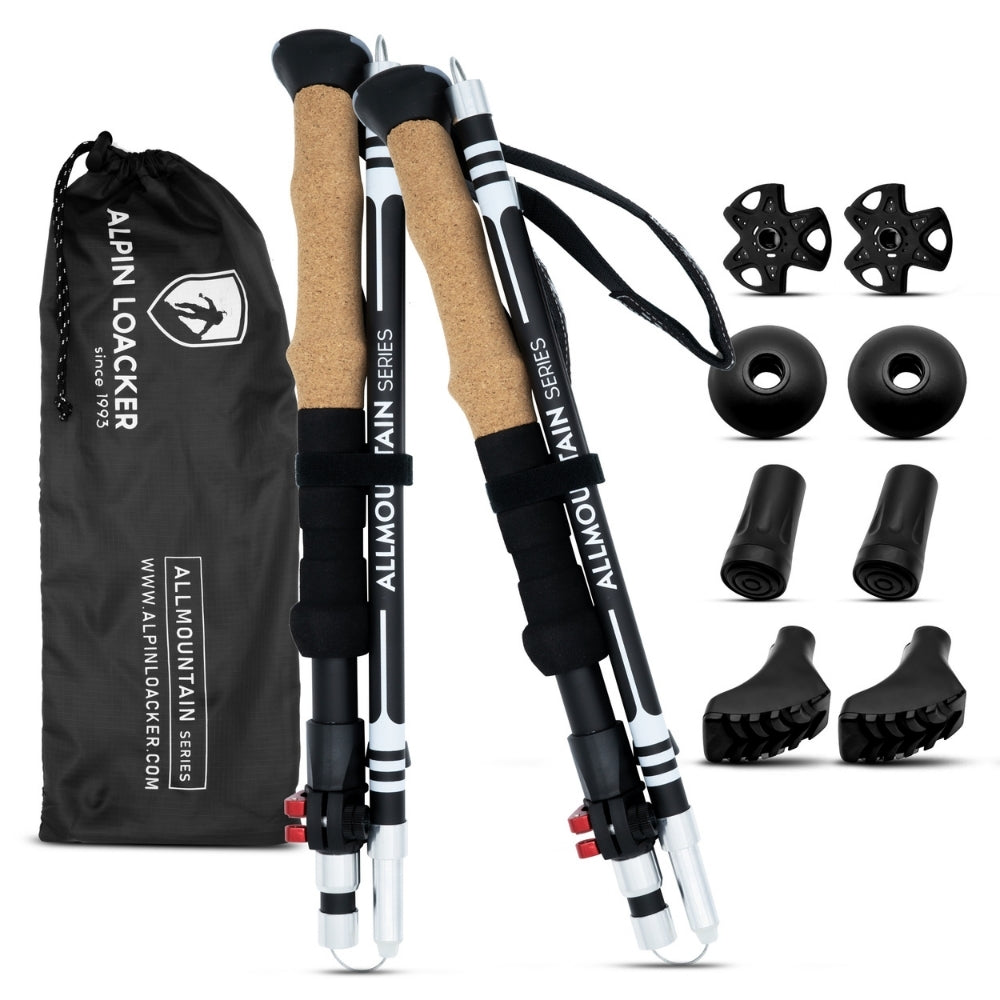

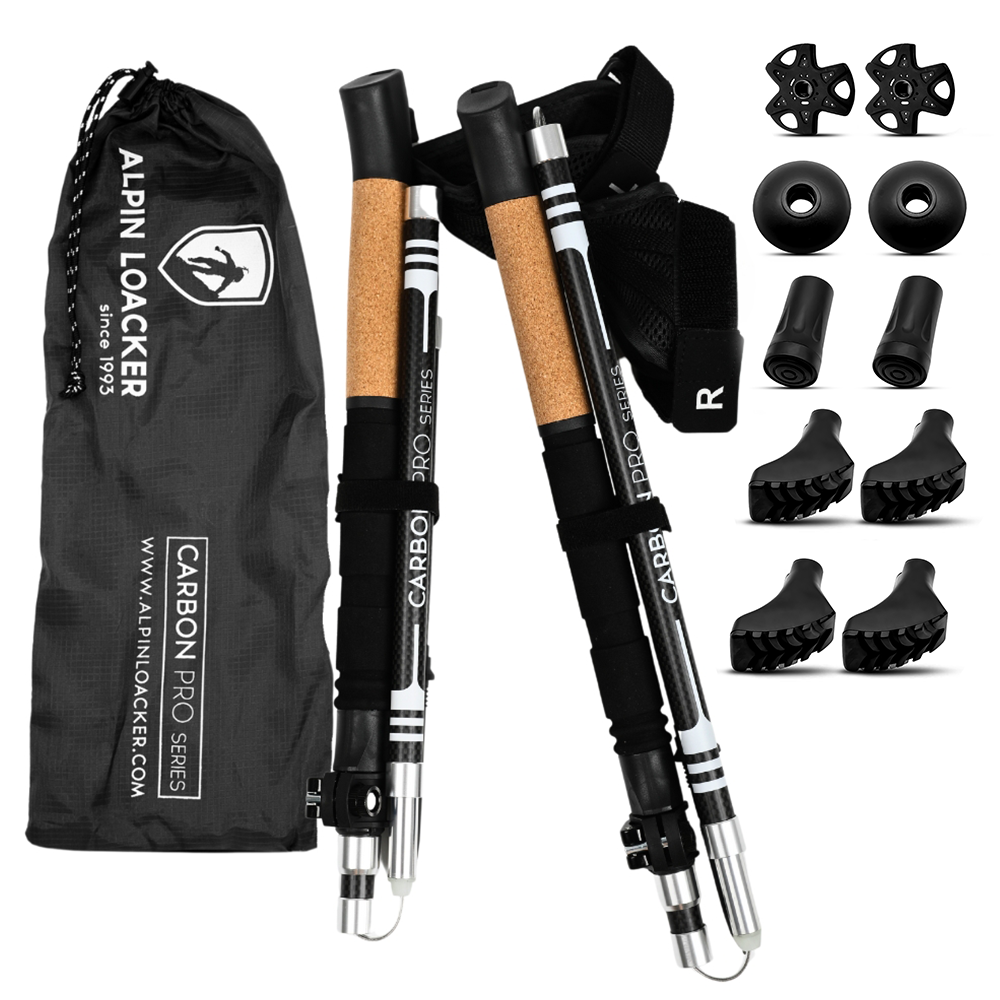
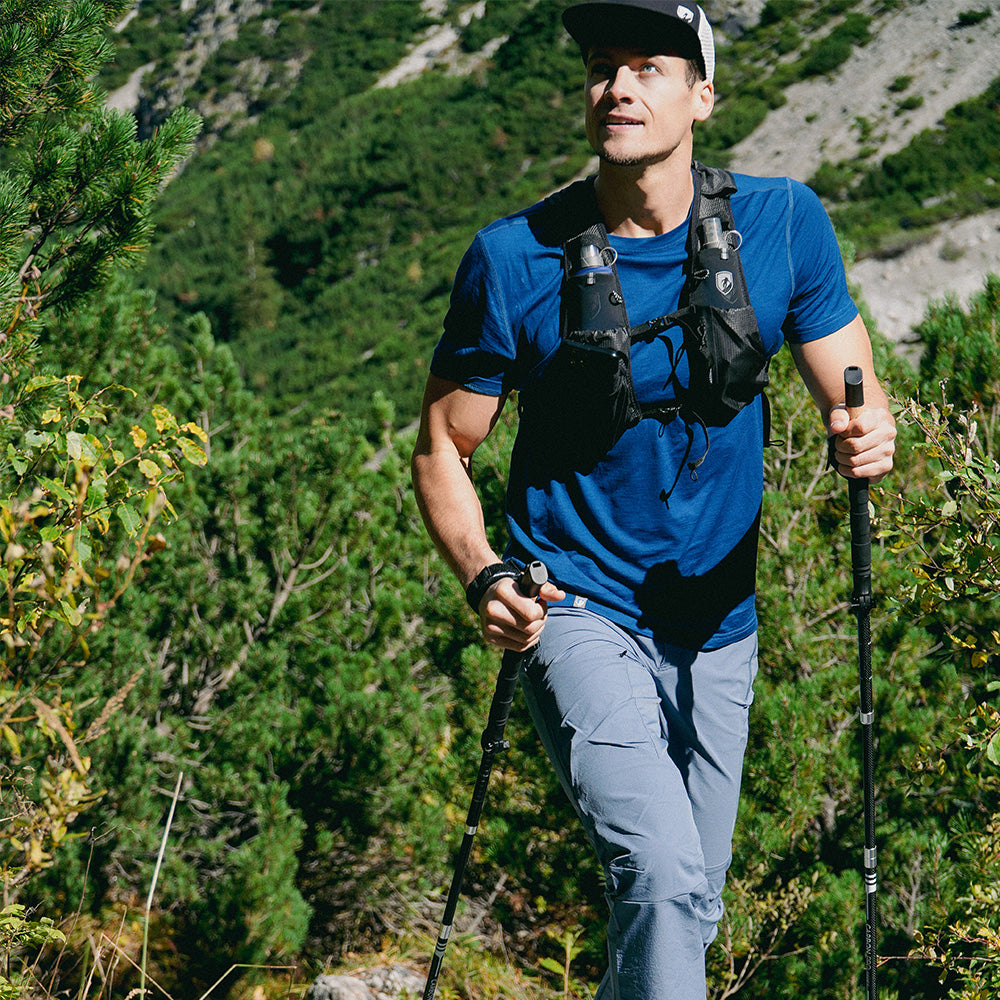
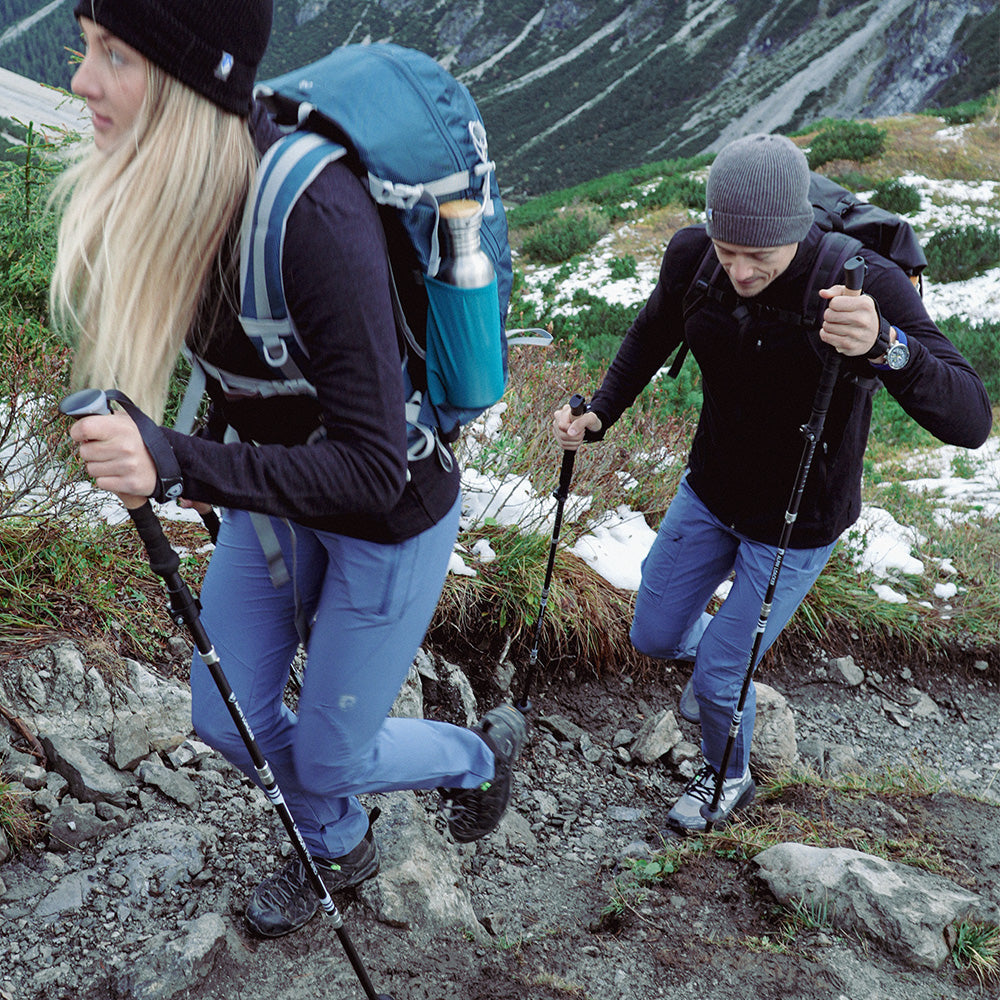
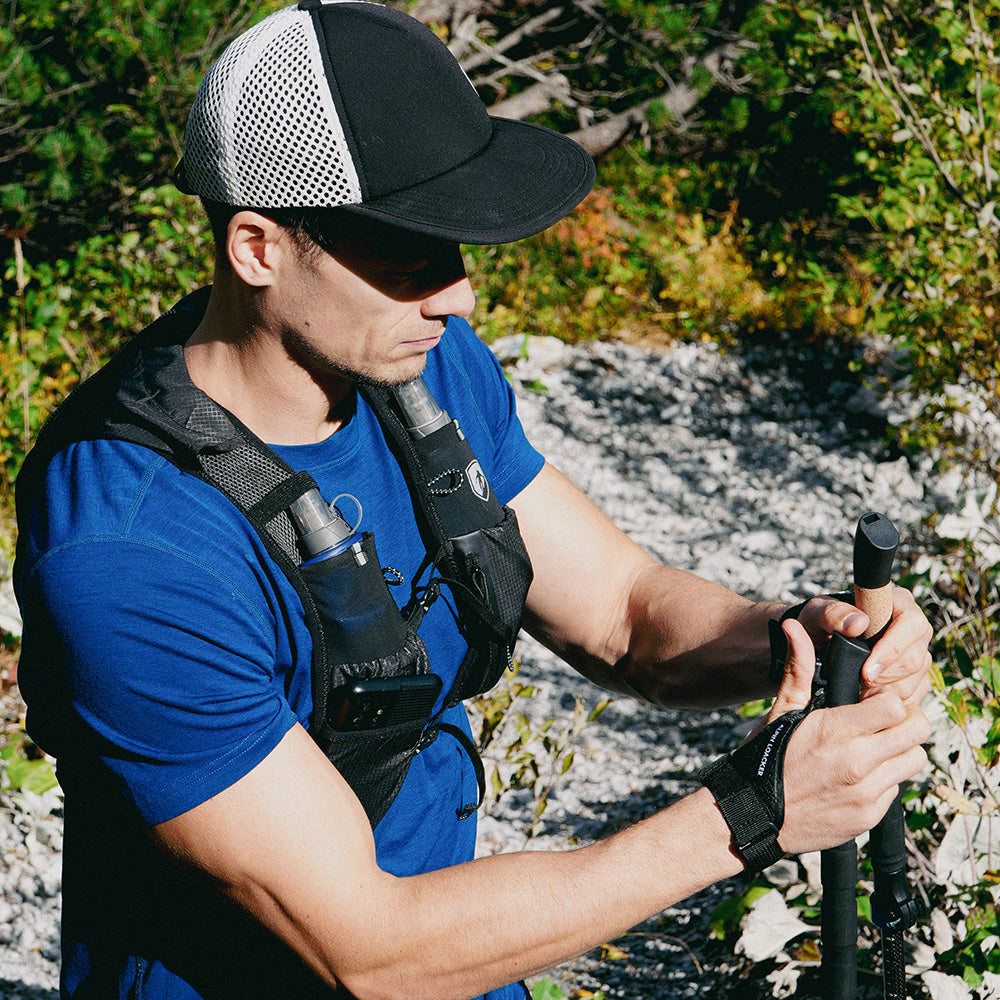

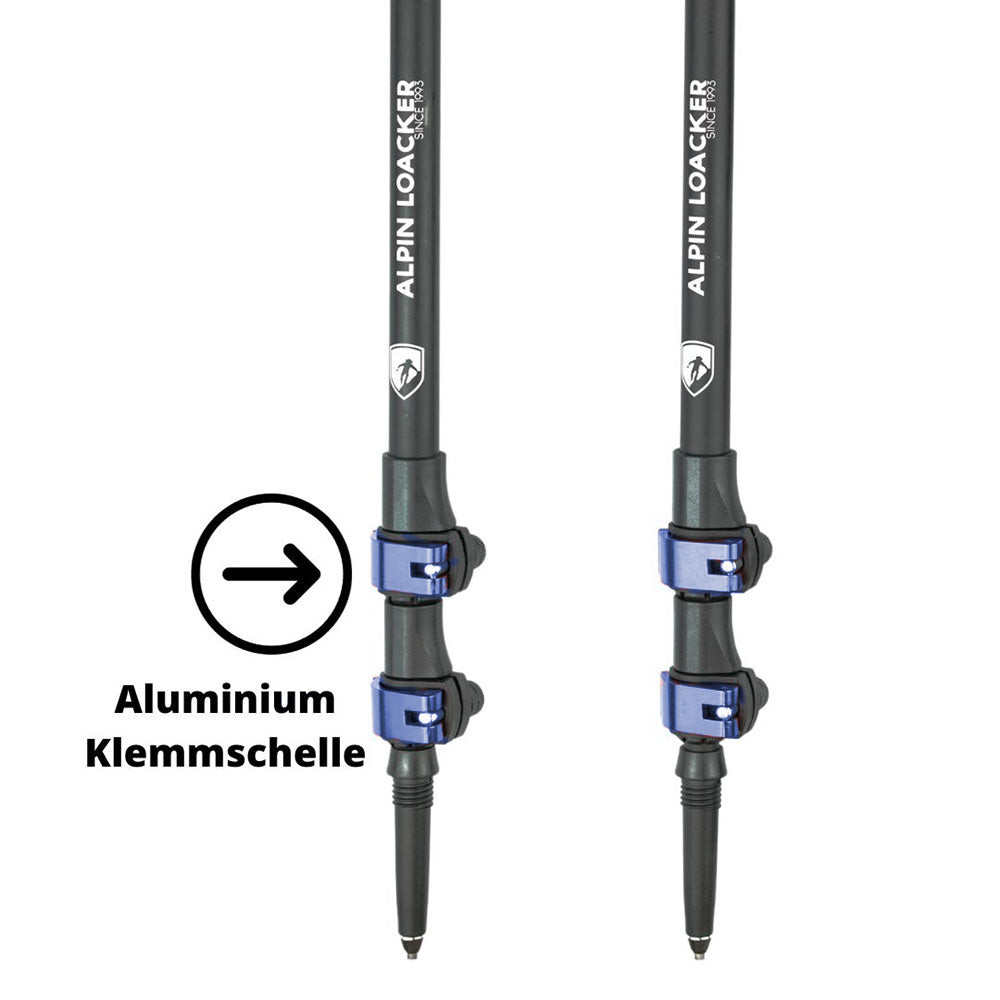
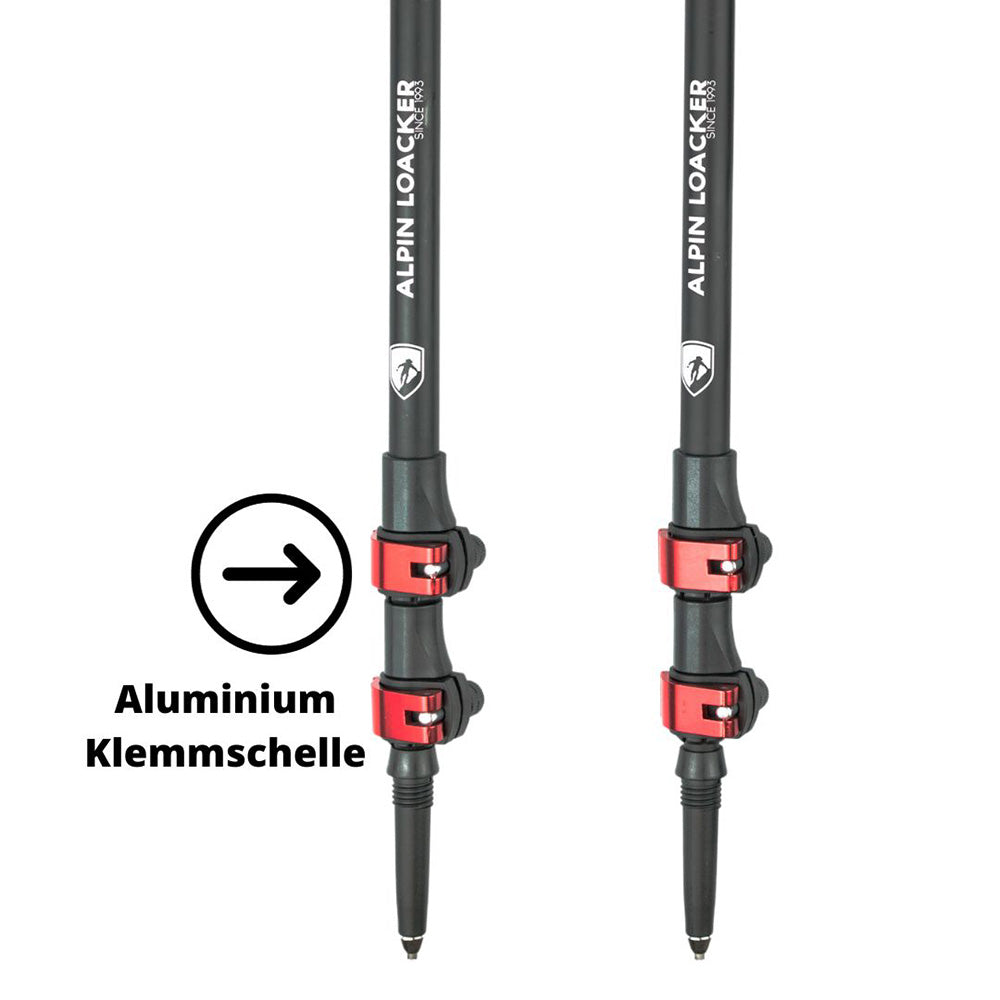
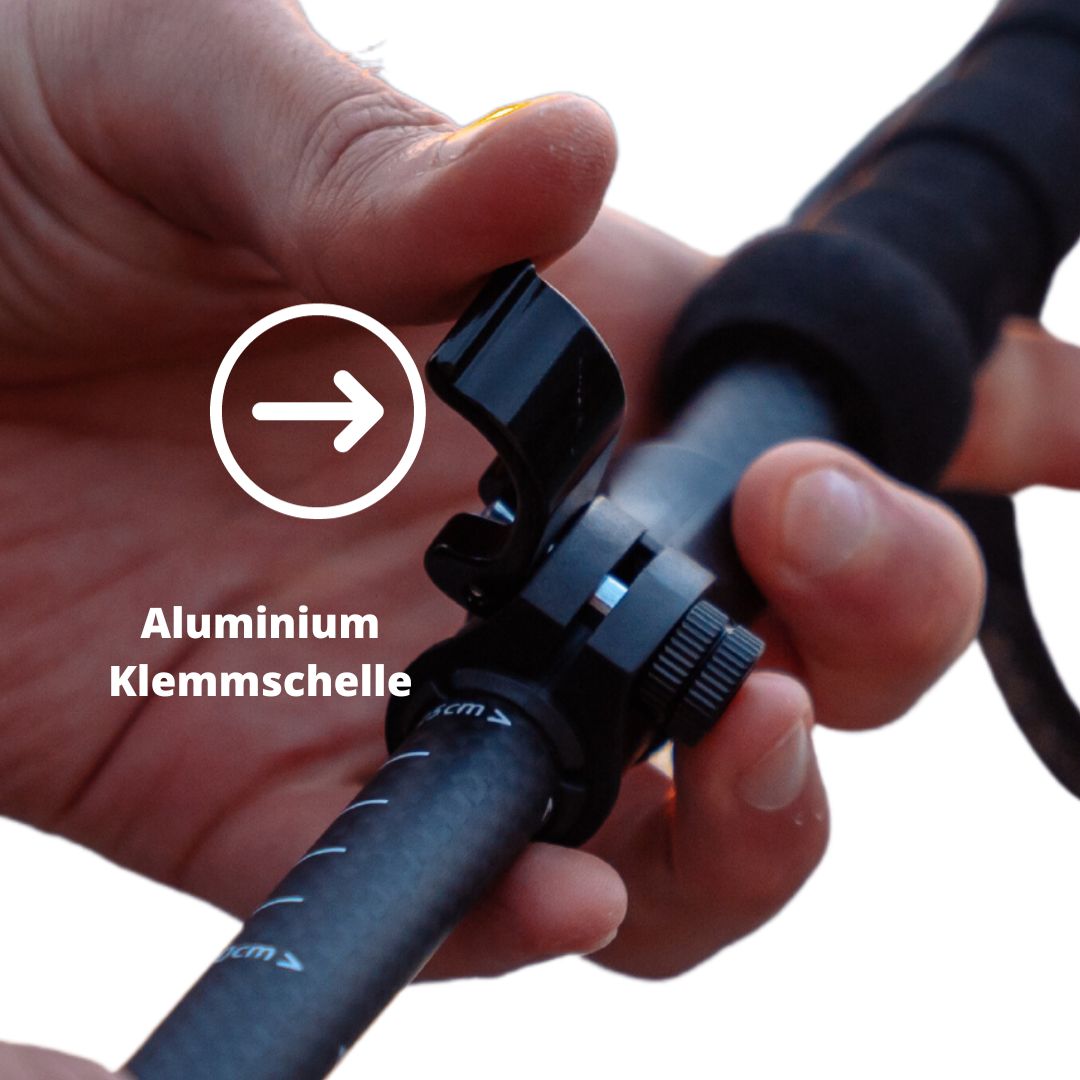


Foldable trekking poles by Alpin Loacker are the choice for trail runners, fastpackers, and anyone who cares about weight and pack size. Foldable trekking poles – ready to use in seconds or stowed in your backpack – are the ultimate tool for fast mountain runners and ultralight trekkers. Carbon construction for minimal weight with maximum stiffness. Free shipping from €50.
Foldable Trekking Poles: Advantages Over Telescopic Poles
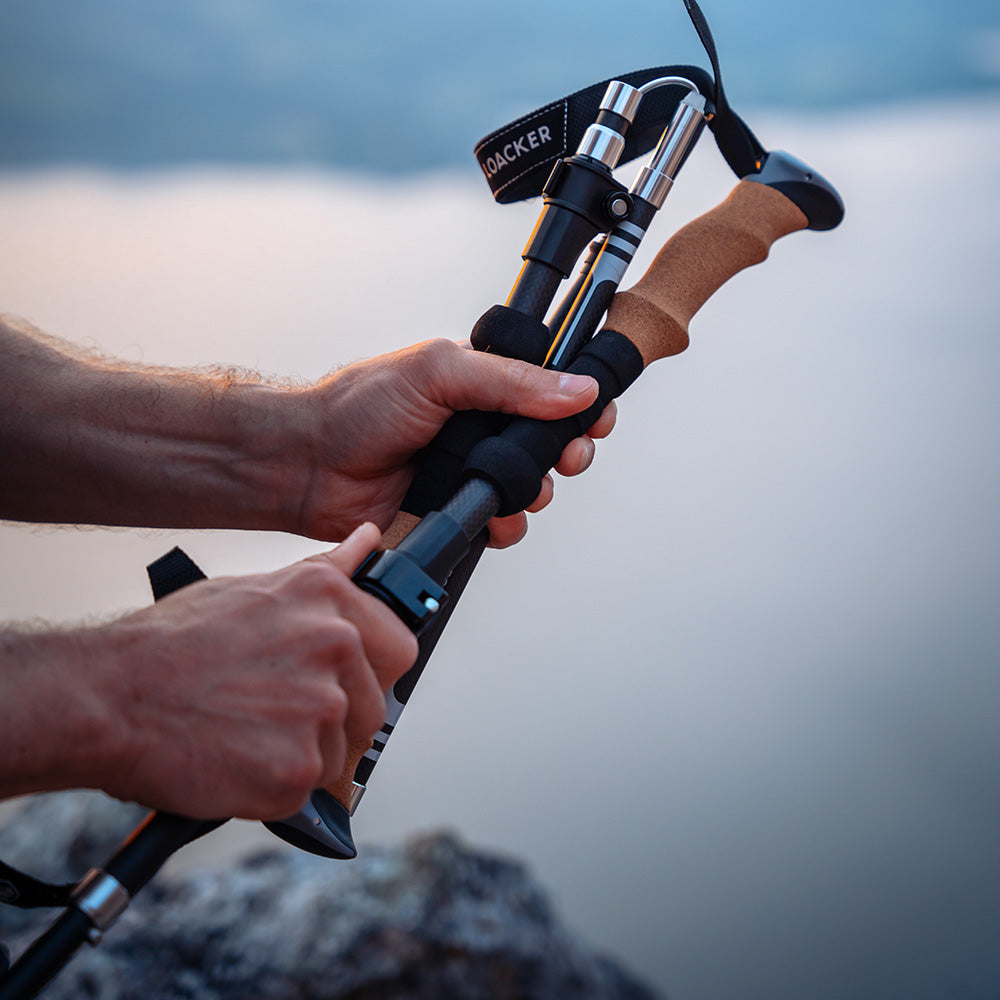
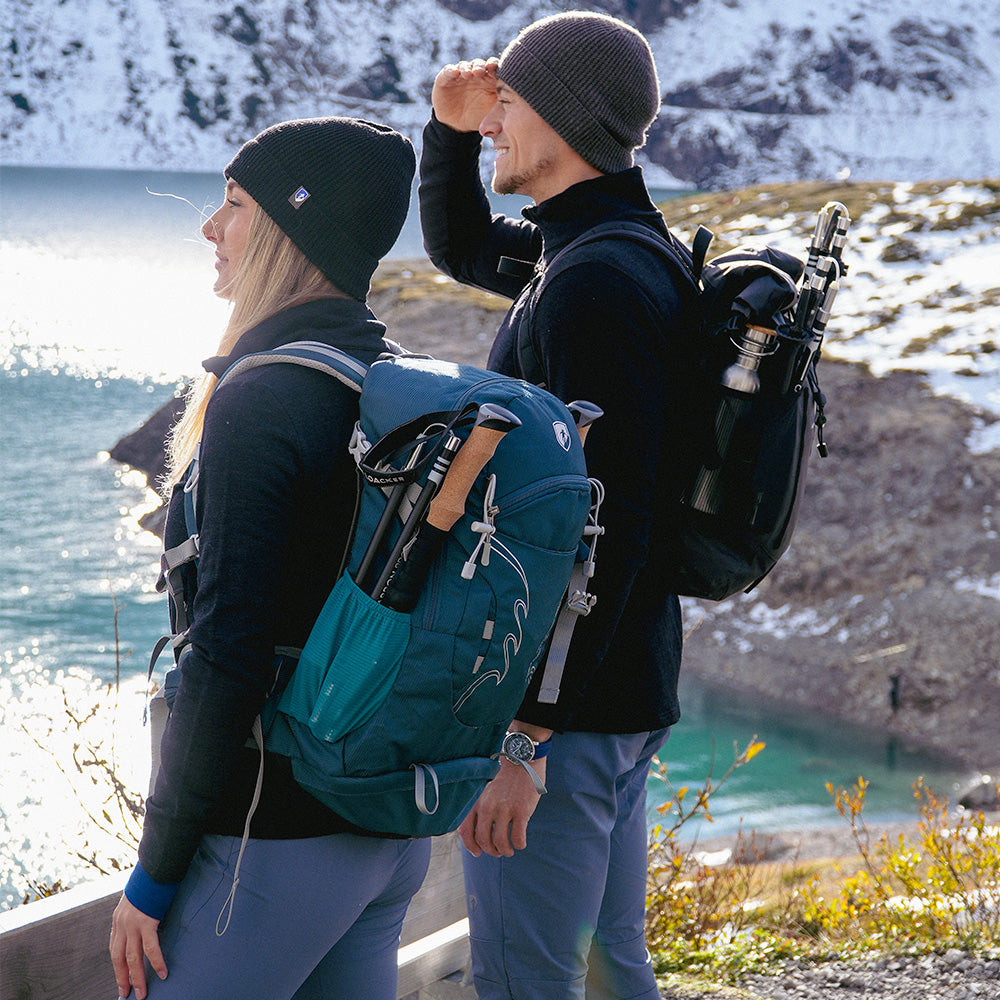
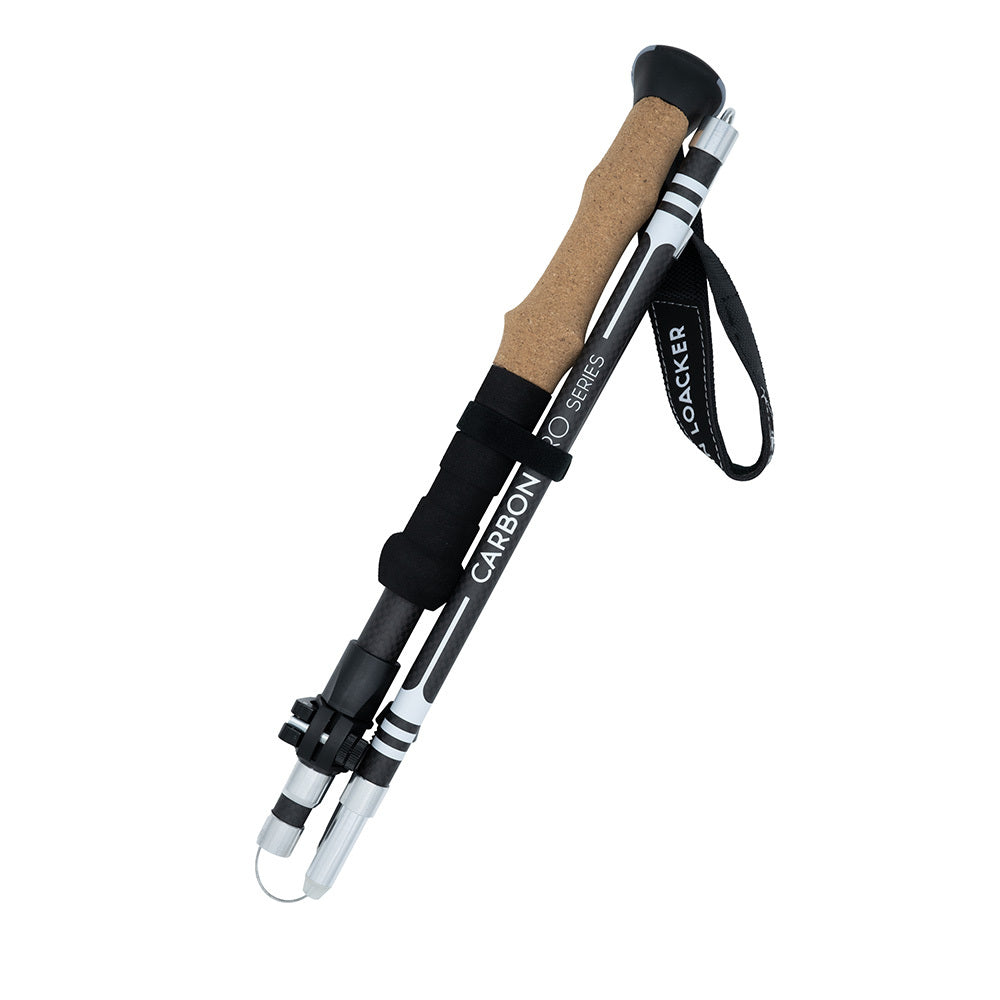
Foldable trekking poles outperform telescopic poles in one decisive aspect: pack size and deployment speed. A carbon folding pole pair can be folded down in under 5 seconds and attached to your backpack – ideal for trail running sections where you don't need the poles on flat terrain. When folded, foldable trekking poles fit into the side pocket of almost any running backpack.
- Walking poles foldable: Ready to use in seconds – no twisting of clamps
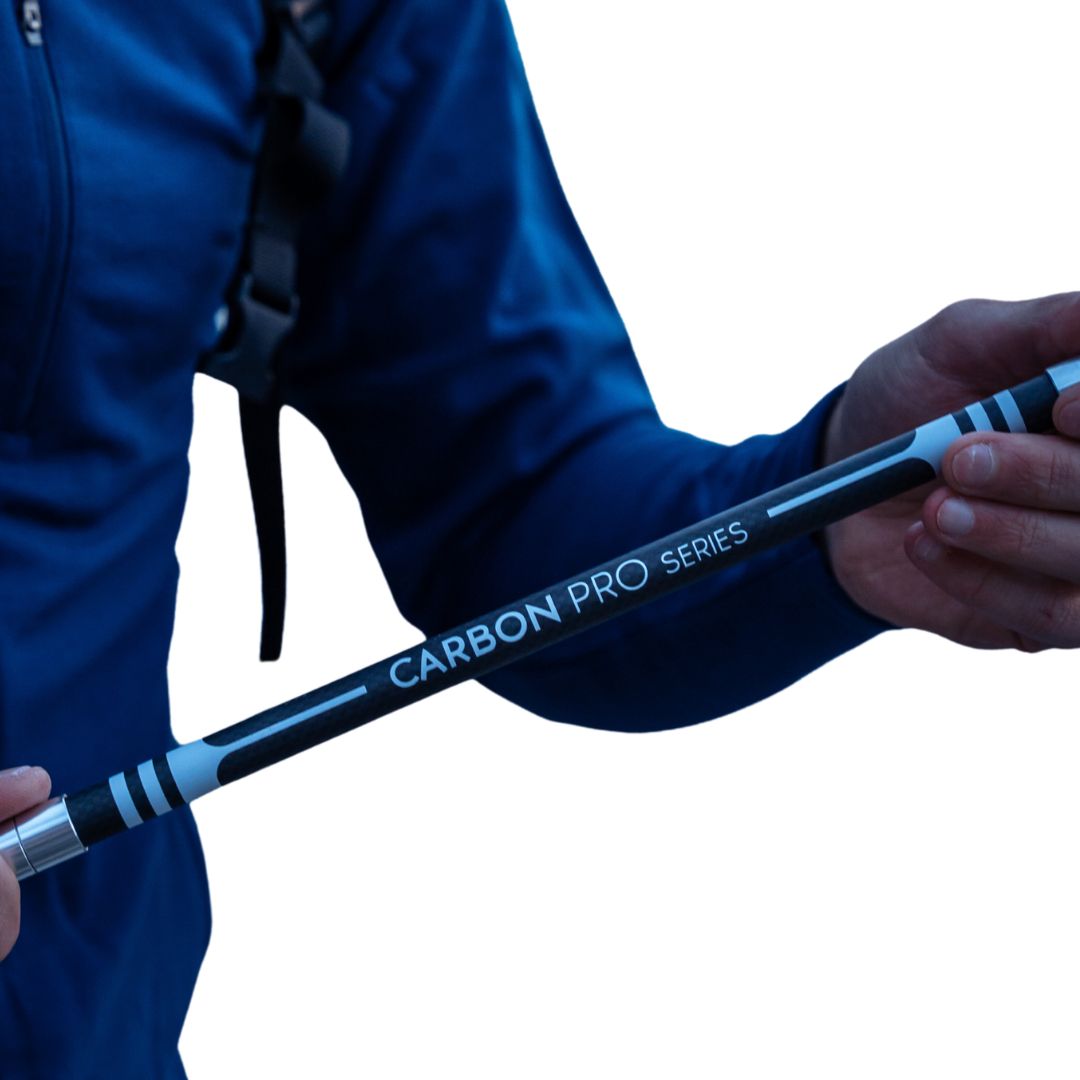
- Carbon construction: Up to 30% lighter than aluminum telescopic poles
- Compact pack size: Fits in any backpack side pocket
- Collapsible trekking poles: Ideal for fastpacking, trail running, and light hut tours
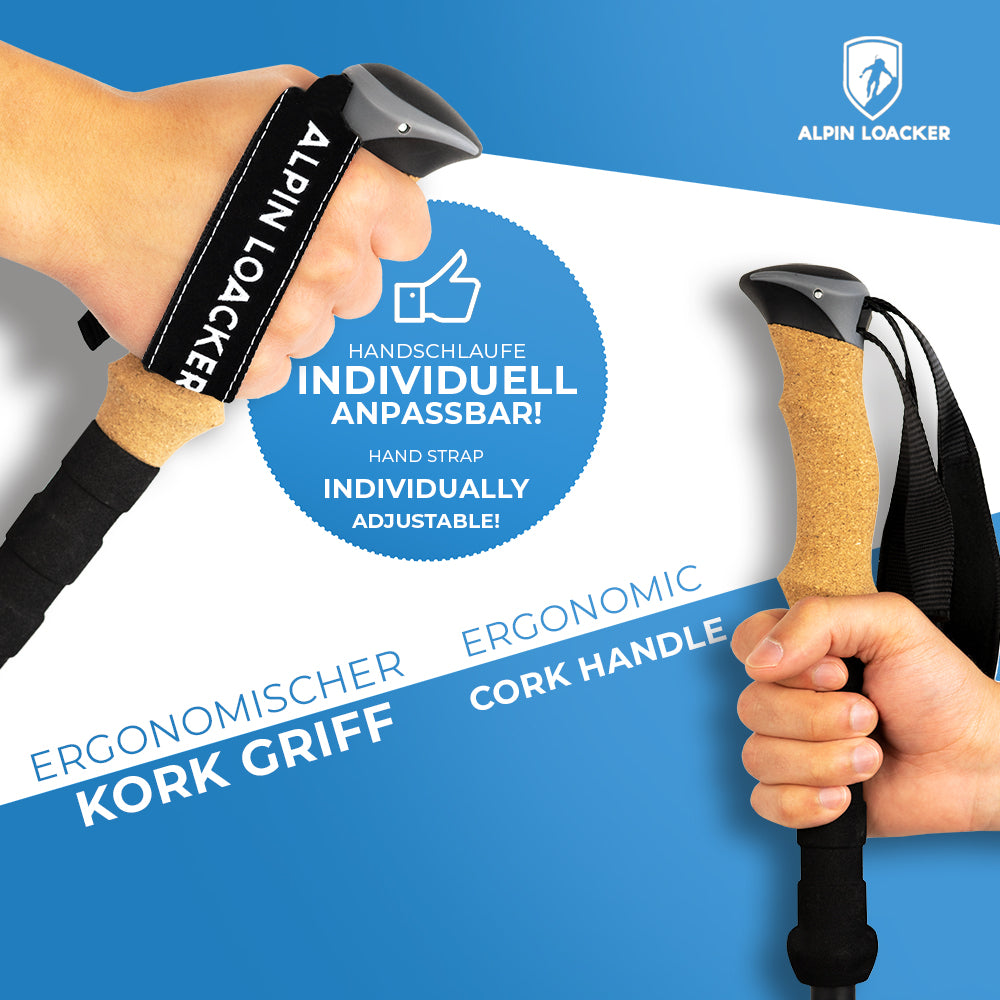
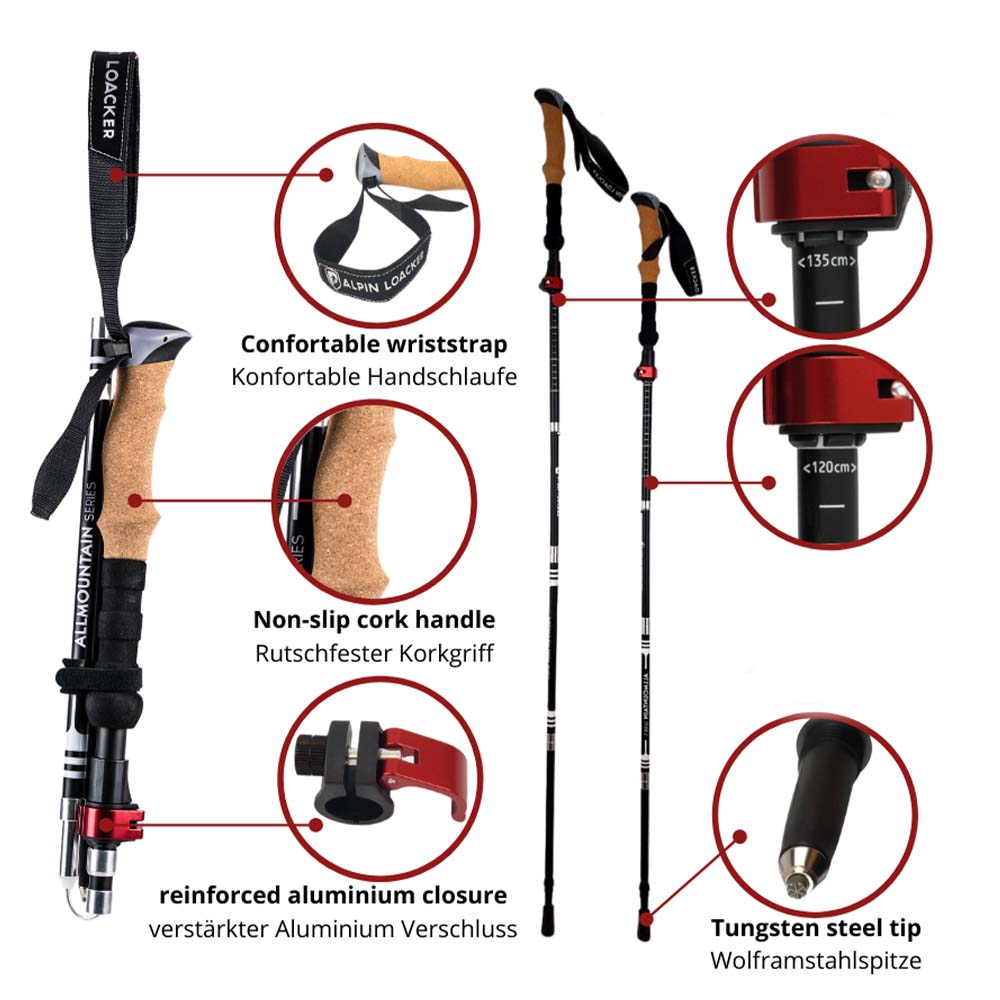
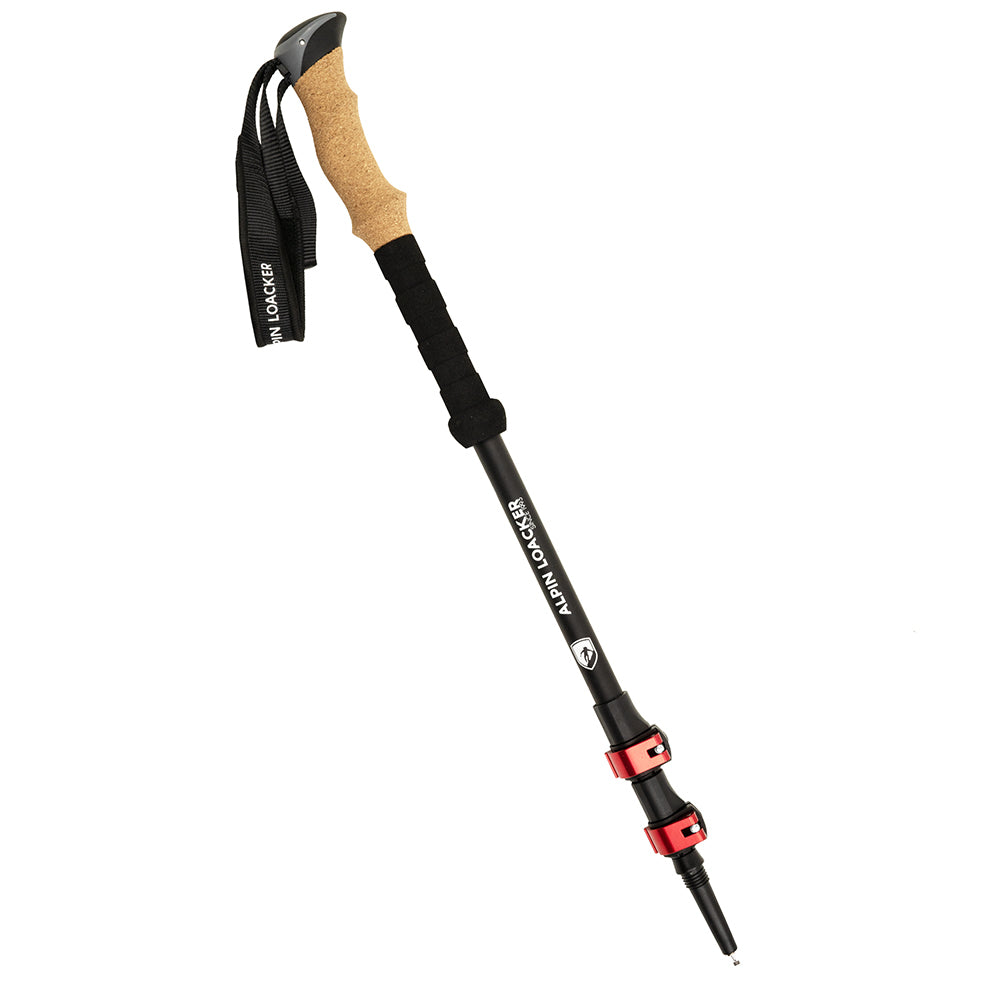
- Cork grips available: Ergonomic and moisture-absorbing for long tours
Lightweight Foldable Trekking Poles: Who Are They Right For?
Lightweight foldable trekking poles are perfect for trail runners who use poles only on ascents, fastpackers with lightweight backpacks, and anyone aiming for less than 250 g per pole. For classic multi-day trekking with heavy loads and challenging terrain, robust telescopic poles offer more reserves – the choice depends on your personal usage profile.
Alpin Loacker Folding Poles: What Makes Them Special?
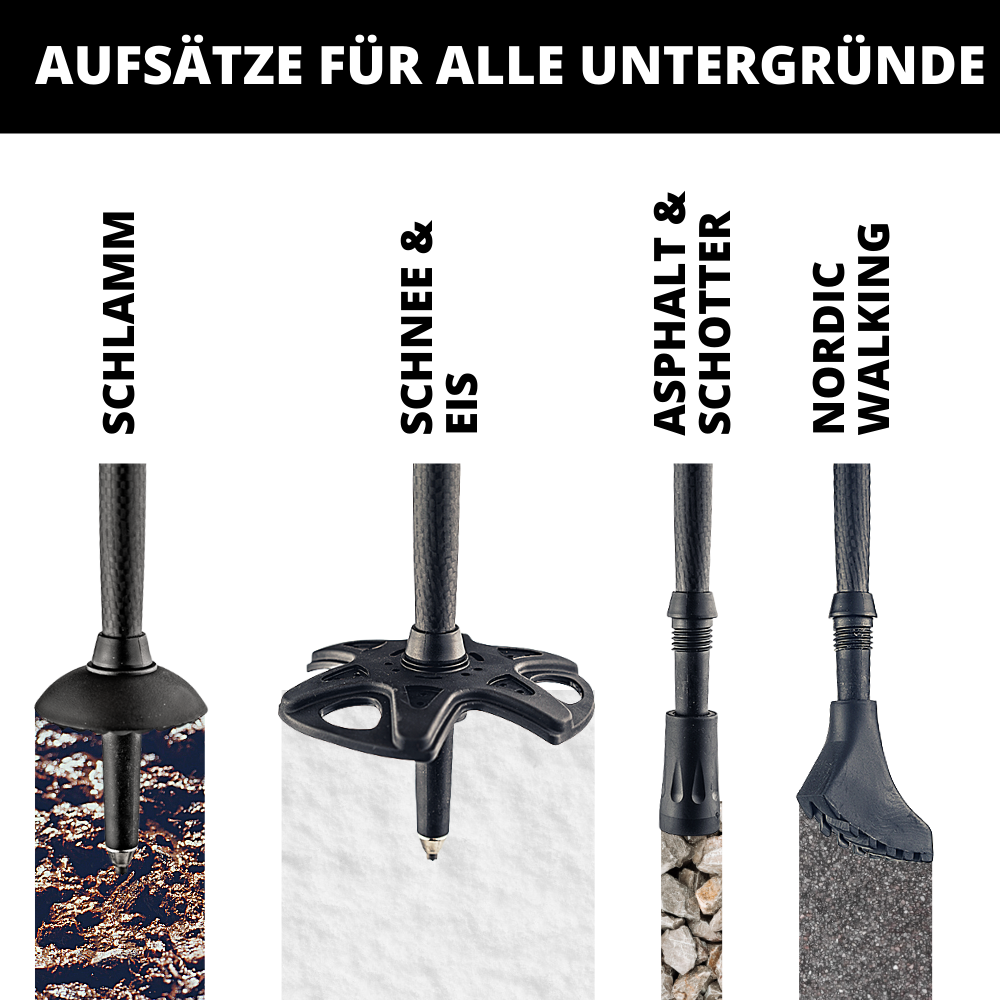
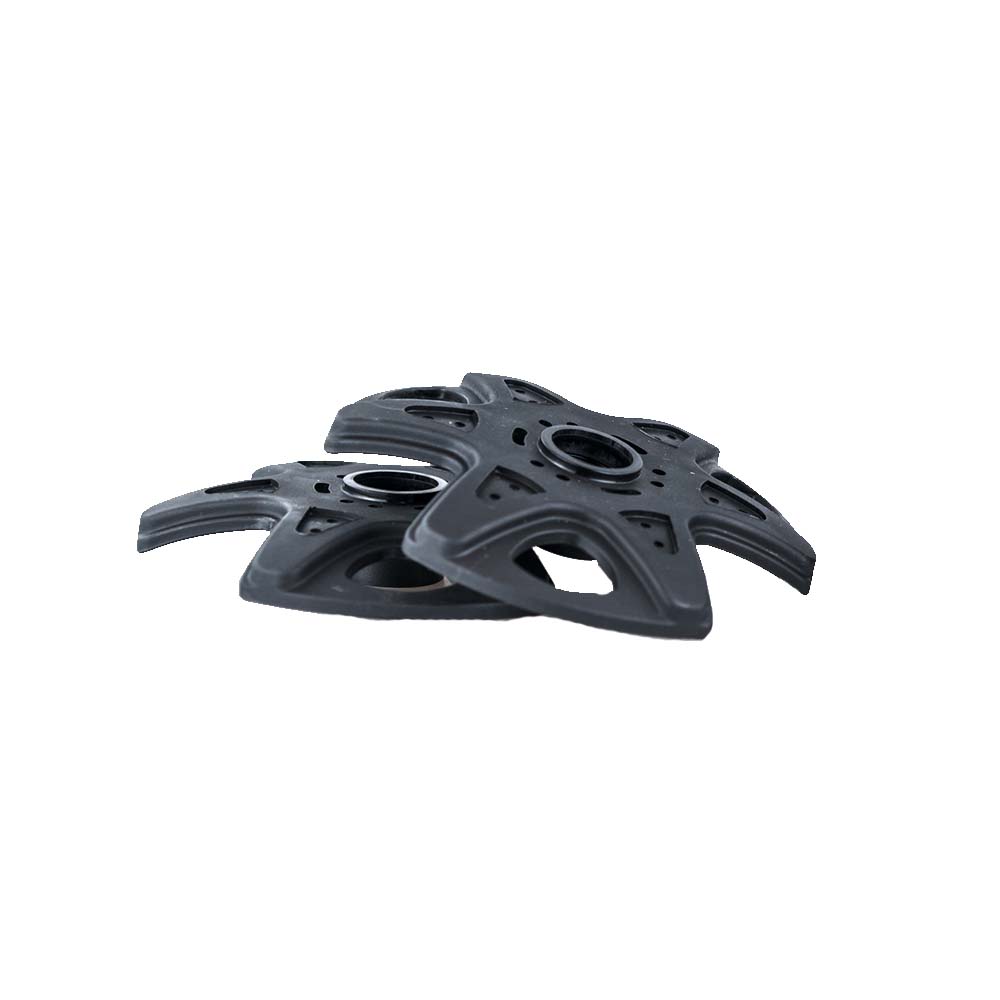
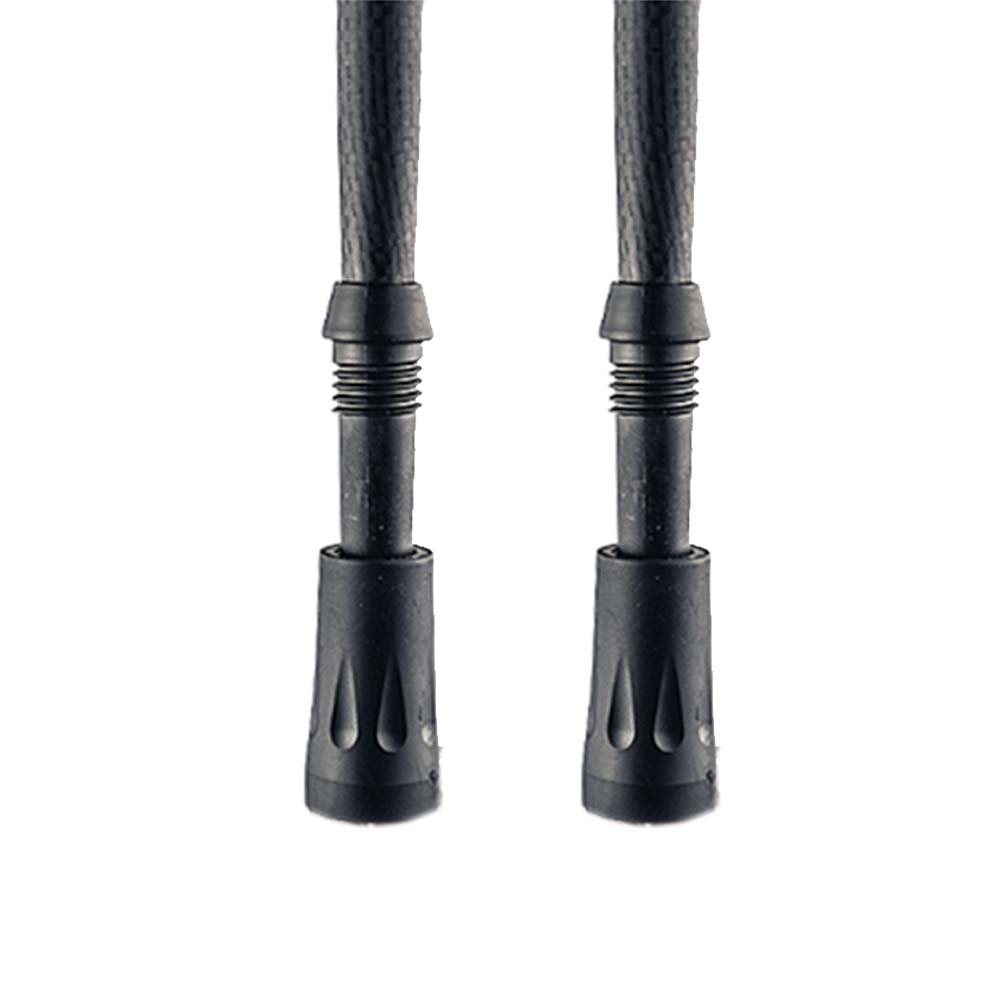
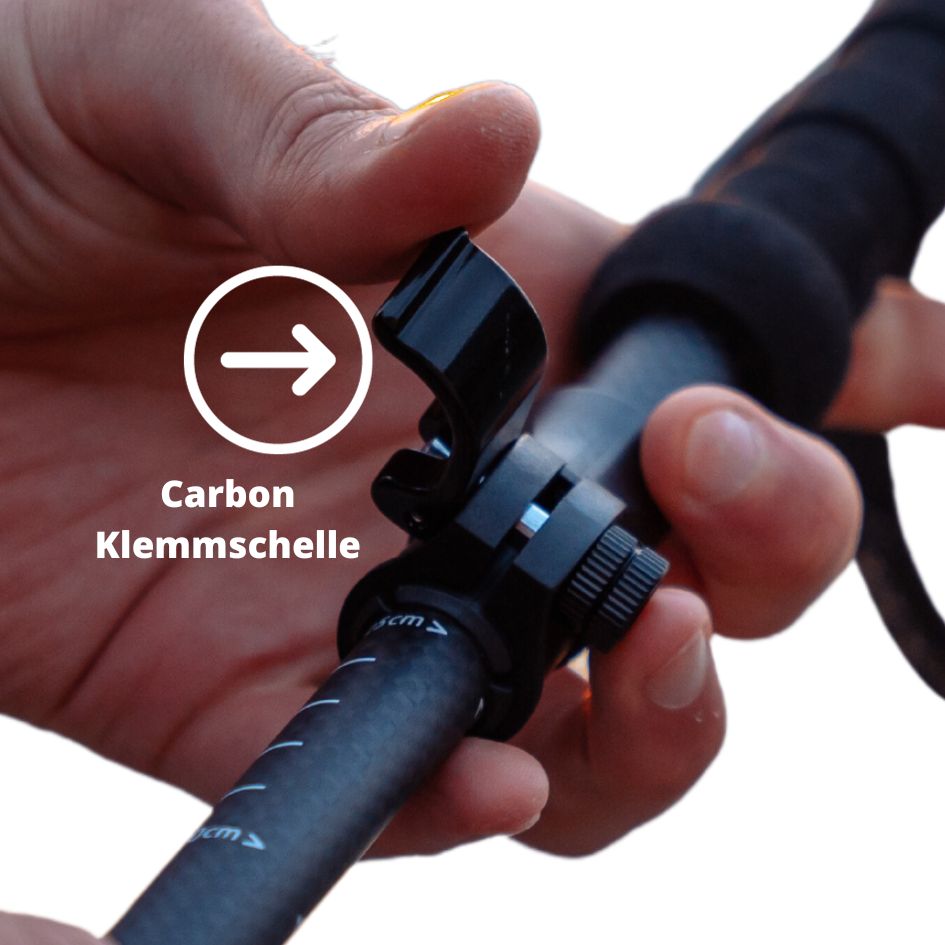
Alpin Loacker carbon folding poles combine minimal weight with sophisticated connection systems. High-quality clamps and reinforced connection cables ensure durability, which is often lacking in cheap products. Replaceable pole baskets and tips make the equipment repairable for years to come. Carbon foldable Nordic walking poles are also available – with special pads for paved paths.
Are Folding Poles Stable Enough for Difficult Terrain?
High-quality carbon folding poles are absolutely suitable for normal terrain. For very technical routes or heavy loads, telescopic poles offer more reserves. For trail running, hut tours, and day trips, folding poles are the lighter and more practical choice.
What Length for Foldable Trekking Poles?
Foldable trekking poles usually come in fixed lengths. For optimal sizing: bend your forearm 90°, pole tip on the ground. For people 165–175 cm: 110–115 cm. For 175–185 cm: 120–125 cm. Some models offer limited length adjustment via a click mechanism.
How Quickly Are Folding Poles Ready to Use?
Good folding poles are unfolded and ready to use in under 5 seconds from your backpack. This makes them especially popular for trail running, where you stow the poles on flat sections and quickly unpack them again at the ascent.