



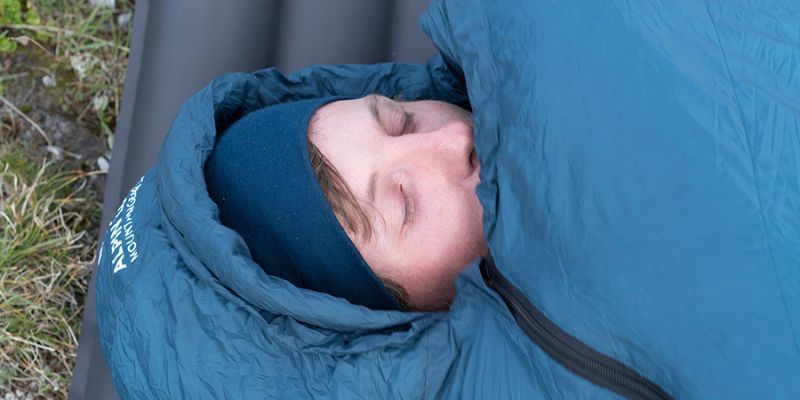
A high-quality down sleeping bag is often the key to restful nights under the open sky for outdoor enthusiasts. With this ultimate guide to buying a lightweight down sleeping bag, we at Alpin Loacker want to provide you with well-founded decision-making support. Whether you're a weekend hiker, ambitious mountaineer, or passionate trekker – we show you what really matters when it comes to warmth, weight, fit, and quality, so your next night's sleep on the trail becomes a pleasure.
Why a Lightweight Down Sleeping Bag is the Best Choice
Down sleeping bags have been the first choice for decades when it comes to the optimal balance of warmth, pack size, and weight. Compared to synthetic sleeping bags, down offers outstanding warmth-to-weight ratio, is extremely compressible, and provides a pleasantly dry sleeping climate. Especially on multi-day tours, every gram in your backpack counts – and this is exactly where a lightweight down sleeping bag shines.
Warmth and Insulation
Down filling is a natural insulator: the fine feathers create countless air pockets that efficiently retain your body heat. The higher the quality of the down (measured in Cuin / fill power), the less material is needed to achieve the same warmth performance – this saves weight and noticeably reduces pack size.
Pack Size and Weight
Thanks to the natural compressibility of down, down sleeping bags can be packed smaller than almost any other type of sleeping bag. Those who rely on compact equipment ideally combine their sleeping bag with a lightweight sleeping pad – as we describe in detail in our article on ultralight sleeping pads for winter tours.
Breathability and Moisture Management
Down is naturally breathable and efficiently transports moisture to the outside. This creates a pleasant sleeping climate without annoying sweating or cooling down. Combined with functional base layers – such as Merino functional underwear – you can maximize comfort and warmth performance even further.
How to Find the Right Down Sleeping Bag
To ensure your new sleeping bag truly suits you and your intended use, you should consider several key criteria. We've compiled the most important points.
Temperature Range
First, determine which season and at what temperatures you'll use the sleeping bag. Pay attention to the comfort temperature – the range in which you sleep comfortably and relaxed. This is usually 5–10 °C above the extreme temperature. Those heading out in cold seasons should also pay attention to appropriate equipment, as described in our guide on ultralight tents for cold nights.
Size and Fit
The right size is crucial for your sleeping comfort. A sleeping bag that's too tight restricts your movement, while one that's too loose lets cool air in and creates cold spots. Compare your height with the manufacturer's specifications and look for an anatomically shaped mummy cut that fits you optimally.
Fill and Quality
Down quality determines warmth performance, weight, and longevity. Pay attention to:
- Fill Power (Cuin): Values from 650 Cuin are considered high-quality, from 800 Cuin as premium.
- Down Ratio: Mix ratios of 90/10 (down/feather) offer the best insulation.
- Construction: Clean seams, well-thought-out compartment design, and even down distribution prevent cold spots.
- Outer Material: Lightweight, tear-resistant, and water-repellent fabrics protect the delicate down.
Additional Features
Depending on your use, details such as an insulating hood, foot pocket, heat collar, interior pockets, or a two-way zipper can significantly increase comfort. Those looking for an all-rounder will find additional inspiration in our article Alpin Loacker Sleeping Bag for Winter Adventures.
Care and Durability of Your Down Sleeping Bag
A down sleeping bag is an investment – with proper care, it will accompany you for many years. Never store it permanently compressed; instead, keep it loose in a large storage bag to maintain its loft. Air it out thoroughly after each tour to remove residual moisture. It should only be washed when necessary with special down detergent in a gentle cycle, and then fluffed up in the dryer with tennis balls.
Tip: If you're heading out on winter tours, ideally combine your sleeping bag with a high-quality pad – such as a sleeping pad for side sleepers. This way you'll avoid heat loss to the ground and significantly increase sleeping comfort.
FAQ – Frequently Asked Questions About Buying a Lightweight Down Sleeping Bag
How Heavy Can a Lightweight Down Sleeping Bag Be?
Down sleeping bags are considered "lightweight" with a weight of approximately 600 g to 1,100 g – depending on the temperature range. Three-season models typically weigh 800–1,000 g, while ultralight summer models can be well under 700 g.
What's Better: Down or Synthetic?
Down offers the best warmth-to-weight ratio, is more compressible, and more durable. Synthetic, on the other hand, is cheaper and insulates better in wet conditions. For tours focused on minimal pack size, down is typically the better choice.
At What Temperature Should I Choose Which Sleeping Bag?
Refer to the comfort temperature. For summer tours, models rated to +5 °C are sufficient; for three-season use, 0 °C to -5 °C is ideal. Those venturing into winter conditions should opt for an expedition model with a comfort temperature below -10 °C.