



Hiking combines nature experience with physical activity – and with the right equipment, every tour becomes more relaxed. An indispensable tool is trekking poles telescope adjustable trekking poles for flexibility and comfort on the go, which can be adapted to the most varied conditions. Whether on easy trails, steep mountain paths or long trekking tours – adjustable poles relieve joints, improve balance and provide more safety on uneven terrain.
Why trekking poles are a real game changer
Many hikers underestimate how much trekking poles reduce stress on the body. Those who regularly venture into the mountains benefit in many ways:
- Joint relief: Knees and hips are noticeably spared, especially on descents, which reduces the risk of injury.
- Improved balance: On slippery paths, when crossing streams or on scree, poles provide additional stability.
- Efficient power distribution: Arms and shoulders are actively engaged, legs are relieved and endurance is increased.
- Support with luggage: With a heavy backpack, poles help distribute the load better and stay stable.
With the right technique, you can even improve cardiovascular performance. Those who want to delve deeper into movement technique will find valuable tips in the article How to use trekking poles correctly.
Trekking poles telescope adjustable trekking poles for flexibility and comfort on the go
Telescope poles are height-adjustable and can be flexibly adapted to body height and terrain. This makes them particularly practical if you're planning different tours or want to share the poles with others.
- Individual adjustment: Shortened on ascents, lengthened on descents – always the optimal pole length at hand.
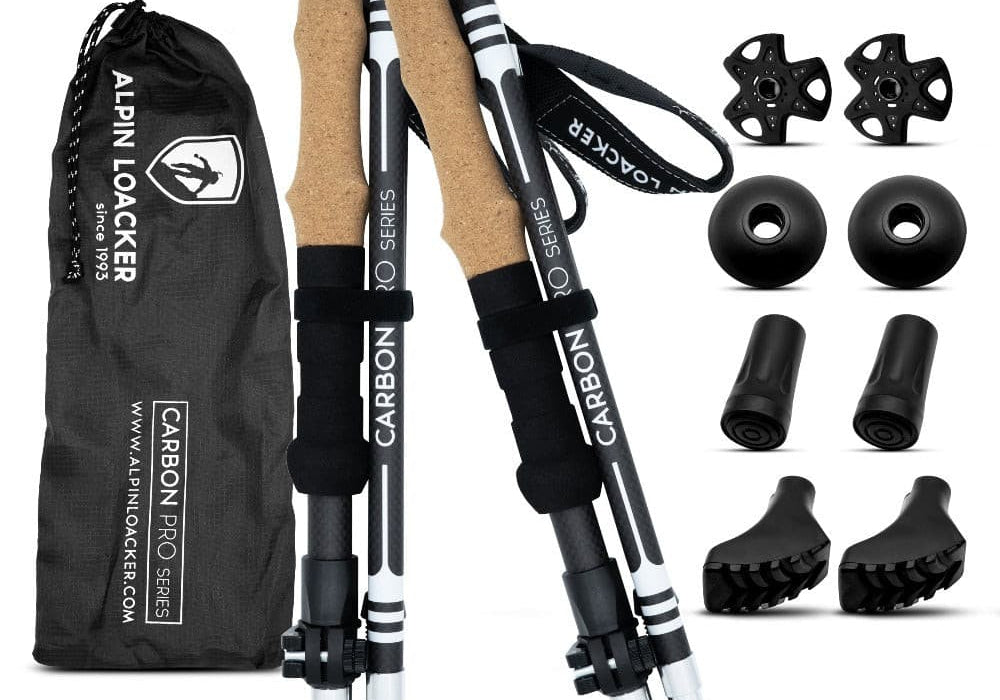
- Ergonomic grips: Cork or foam prevents blistering and feels comfortable in the hand.
- Stable construction: Materials such as aluminium or carbon combine low weight with high load-bearing capacity.
If you can't decide between materials, you'll find a detailed comparison in the Trekking Poles Test 2026: Carbon vs. Aluminium. For ambitious mountaineers, it's also worth taking a look at carbon trekking poles for long trekking tours.
Foldable trekking poles as a smart alternative
In addition to telescope models, foldable trekking poles are an exciting option – especially for travelers, trail runners and minimalists who value a compact packed size.
- Compact size: When folded, they fit into almost any backpack or travel trolley.
- Quick deployment: Modern click mechanisms allow lightning-fast opening and folding.
- Lightweight: High-quality materials noticeably reduce overall weight.
If you're planning winter tours, take a closer look at the foldable trekking pole for winter hikes – the combination of packed size and stability is particularly convincing here.
Material selection, grips and accessories
To enjoy your poles for a long time, it's worth taking a closer look at quality and details. Most high-quality trekking poles telescope adjustable trekking poles for flexibility and comfort on the go are made of aluminium or carbon:
- Aluminium: Robust, durable and comparatively inexpensive – ideal for demanding tours and rough terrain.
- Carbon: Extremely light and vibration-damping – perfect for long distances and multi-day tours. Read more about the perfect balance of lightness and robustness.
The grips also determine comfort: Cork adapts to the shape of your hand and absorbs moisture, foam remains pleasantly soft. Adjustable hand straps increase safety and control, while anti-shock systems absorb impacts on hard ground and provide additional joint relief.
Don't forget: the right tips. Which ones you need and when is explained in the article Trekking poles – which tip for which terrain. Hardmetal tips grip on rock and ice, rubber buffers protect asphalt and forest trails.
Tips for proper use
To get the most out of your poles, the right technique is essential:
- Adjust the length so that your forearm forms a right angle when standing.
- Shorten the poles on ascents by about 5–10 cm, lengthen them accordingly on descents.
- Plant the poles in alternation with the opposite leg – this promotes smooth movement.
- Use the hand straps correctly so you can lightly support yourself without gripping cramped.
In icy conditions, it's also worth taking a closer look at the technique tips for cold months so you can stay safe even in winter.
Frequently asked questions
Are telescope or foldable trekking poles better?
It depends on the application: Telescope poles are particularly flexible in length adjustment and ideal for varying terrain. Foldable poles excel with a small packed size and are perfect for travel, trail running or tours with lots of transport.
What material should my trekking poles be made of?
Aluminium is robust, durable and cheaper – a safe choice for most hikers. Carbon is much lighter and vibration-damping, but more sensitive to point loads. For long trekking tours, carbon is often the better choice.
How do I set the right pole length?
Stand upright and grip the pole so that your elbow forms a 90-degree angle. Slightly shorter on ascents, slightly longer on descents – so the pole supports you optimally while protecting your joints.