



Hiking is for many more than just movement – it's passion, relaxation, and adventure all at once. To make every tour a complete success, the right equipment is essential. In particular, carbon telescopic trekking poles have established themselves as a favorite among ambitious outdoor enthusiasts in recent years. They relieve joints, provide stability, and stand out with an unbeatable low weight. In this article, you'll learn why ultralight carbon trekking poles are the best choice for your next hike and what to look for when making a purchase.
Lightweight Meets Stability: The Advantages of Carbon Telescopic Trekking Poles
One of the greatest advantages of carbon trekking poles is their extremely low weight. Compared to aluminum models, you save valuable grams with every swing movement – and this adds up noticeably on long tours. Less strain on your arms and shoulders means more endurance, more comfort, and less exhaustion at the end of the day.
But low weight alone doesn't make a good trekking pole. Carbon impresses with an exceptionally high strength and stiffness. Despite the delicate design, carbon telescopic trekking poles withstand demanding loads – whether on steep climbs, slippery terrain, or rough ground. If you're looking for a direct comparison of materials, you'll find a detailed comparison in the article Trekking Poles Test 2026: Carbon vs. Aluminum.
Why Vibration Dampening Is Crucial
An often underestimated advantage of carbon is its natural ability to absorb vibrations. On rocky or hard trails, shocks are otherwise transmitted directly to hands, wrists, and elbows. Carbon dampens these impacts significantly better than metal – this protects your joints and ensures that you can continue comfortably even after several hours. A real game-changer, especially on long trekking tours.
Durability and Weather Resistance for Every Trail
Hikers are out in all weather conditions – the equipment must keep up. Carbon is naturally corrosion-resistant: rain, snow, mud, or salty air on a coastal trail can't harm the material. While aluminum poles can show signs of corrosion over time, carbon poles remain reliably operational for many years.
For particularly long tours or steep climbs, it's worth taking a look at our guide to carbon trekking poles for long trekking tours. There you'll learn what really matters with intensive use – from locking mechanisms to tip shape.
The Right Tip for Every Terrain
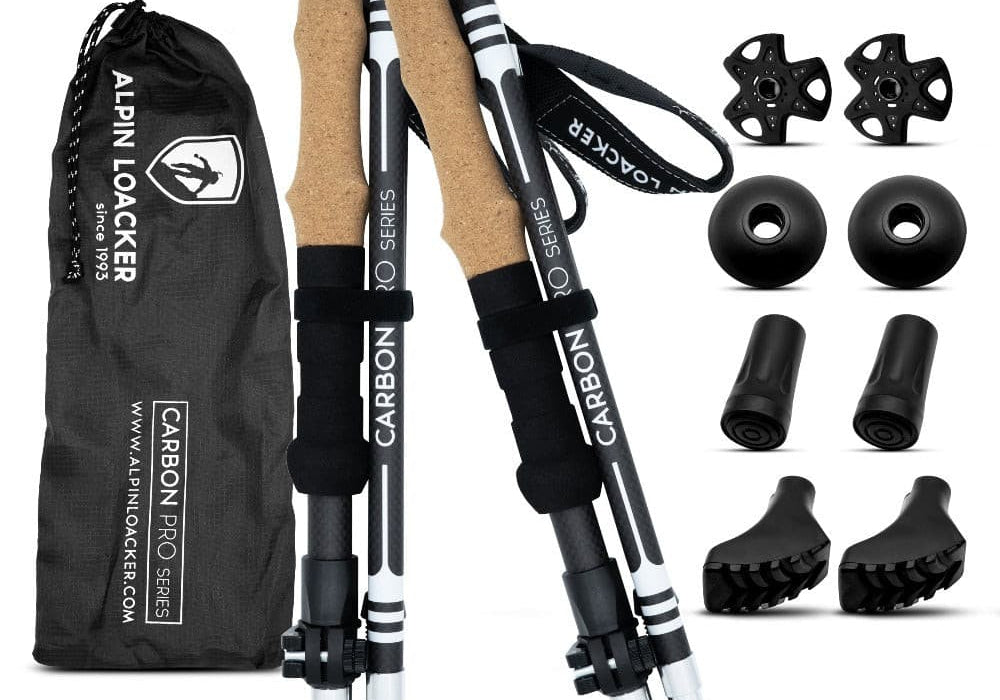
A trekking pole is only as good as its ground contact. Depending on the terrain, different tips and baskets are used – whether a hard metal tip for rocky ground or rubber bumpers for asphalt. Our article on choosing the right trekking pole tip explains in detail which variant is appropriate when.
Adjustability and Handling: Comfort in the Details
Modern carbon telescopic trekking poles are equipped with clever features that make hiking much easier:
- Height-adjustable telescopic segments, ideal for different terrain types and body sizes
- Ergonomic grips made of cork or EVA foam for blister-free hiking
- Adjustable wrist straps for secure grip and relaxed hand position
- Compact packed size that simplifies transport in or on your backpack
If you want to reduce your packed size even further, you should also check out foldable trekking poles – they're especially popular for backpacking trips and winter hikes. And to make sure your technique is right, take a look at our guide on how to use trekking poles correctly.
Sustainability: Why Carbon Is a Conscious Choice
Those who love nature want to protect it too. Carbon trekking poles stand out through their long lifespan – and that's sustainability in practice. Instead of cheaper models that need to be replaced after a few seasons, you're investing in a product that will accompany you for many years. Additionally, more and more manufacturers, including Alpin Loacker, are focusing on high-quality materials and thoughtful construction so that the equipment lasts as long as possible.
So carbon trekking poles are not only light and stable, but also a conscious choice for everyone who wants to put together their outdoor equipment responsibly.
FAQ – Frequently Asked Questions About Carbon Telescopic Trekking Poles
Are Carbon Trekking Poles Really More Stable Than Aluminum Poles?
Carbon has higher stiffness per weight than aluminum, making it noticeably more stable at the same weight. Aluminum can bend under extreme load, while carbon breaks in extreme cases. For most hiking and trekking applications, high-quality carbon poles are the better choice – especially if lightweight design is important to you.
How Do I Care for My Carbon Trekking Poles Properly?
After each tour, you should take the poles apart, remove dirt with a damp cloth, and let them dry completely before reassembling. This prevents moisture from settling in the closures. You can replace the tips as they wear, which further extends the lifespan.
Who Benefits Most from Carbon Telescopic Trekking Poles?
Carbon telescopic poles are ideal for anyone who hikes regularly, plans longer tours, or values lightweight design. They're also a good choice for people with sensitive joints, since carbon dampens vibrations better than metal. However, those who only occasionally hike on simple trails can do well with aluminum poles too.