



Anyone who regularly spends time in the mountains knows: the right equipment often makes the difference between comfort, safety, and endurance. Especially when hiking or trekking on challenging terrain, carbon trekking poles ultralight and stable hiking poles for every mountain tour play a crucial role. They relieve strain on joints, provide stability on uneven ground, and support your body during long climbs. In recent years, carbon has established itself as the preferred material – and for good reason.
Why carbon is the best material for trekking poles
Carbon is a high-tech material originally developed for motorsports and aviation. It's characterized by tremendous strength combined with minimal weight. For hikers, this means: carbon trekking poles are significantly lighter than aluminum models, yet equally stable and durable. This combination makes them perfect for long tours where every gram counts.
Ultralight carbon trekking poles enable effortless walking, reduce fatigue, and are ideal for anyone venturing into alpine terrain or on long-distance hiking trails. A direct comparison of the two most common materials is worthwhile – you'll find a comprehensive trekking poles test 2026 comparing carbon vs. aluminum in Alpin Loacker's magazine.
Furthermore, carbon offers excellent vibration damping. Every step on rocky ground or during descent creates vibrations that would otherwise transfer to your joints. With high-quality carbon trekking poles, you experience fewer vibrations, which brings noticeable benefits especially on longer stages.
Ultralight yet strong – the perfect balance
A major advantage of carbon trekking poles is their exceptional lightness. Many models weigh less than 200 grams per pole. While this might seem insignificant at first glance, it adds up over thousands of steps per day. Despite their low weight, carbon poles are extremely load-bearing.
Modern manufacturing techniques ensure that the material maintains its stability even under heavy stress. Whether you're navigating rocky ridges or trudging through muddy trails – carbon trekking poles provide reliable support. Even in low temperatures or intense sunlight, they retain their shape and performance. Carbon doesn't warp, rust, or corrode – a clear advantage over metal poles.
If you prefer to travel particularly compact, you should also check out collapsible trekking poles ideal for winter hiking and compact backpacking. They combine minimal packing size with the robustness of modern carbon constructions.
Comfort and ergonomics – decisive for long tours
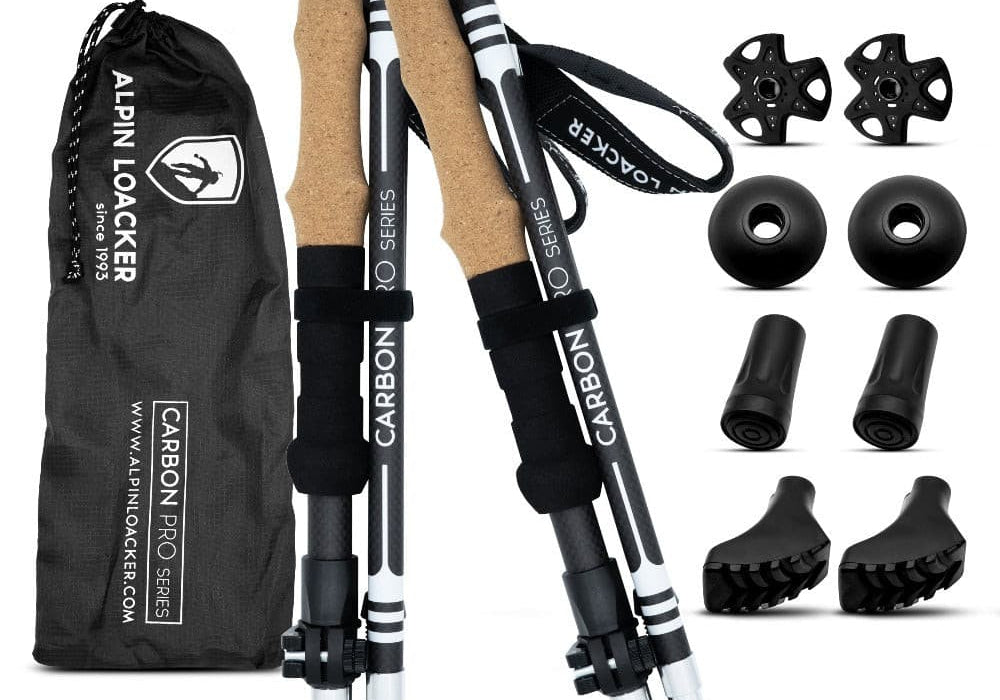
Beyond material, ergonomics play a crucial role. High-quality carbon trekking poles are designed to fit your hand optimally. Grips made of cork or foam feel comfortable in your hand and prevent blistering. They also absorb sweat and remain grippy even with extended use.
Another plus is adjustable length. This allows the trekking poles to be customized individually – depending on your height or the incline. On ascents, you shorten the poles slightly; on descents, you extend them for greater stability. Collapsible models are also particularly practical for transport, as they fit easily into your backpack.
Proper technique is also important. Using your poles correctly saves energy and protects your joints – the article How to use trekking poles correctly – start safely into the 2026 outdoor season provides valuable tips.
Stability, sustainability, and durability on every terrain
Whether you're moving through alpine terrain, across snowfields, or on a leisurely low mountain hike – carbon trekking poles as ultralight and stable hiking poles for every mountain tour provide you with safety on any surface. Their high stiffness enables precise movements, which is especially important on steep passages or when crossing scree fields.
Even in difficult weather conditions – such as rain, snow, or wind – they provide additional stability. Many hikers report that thanks to carbon poles, they not only feel safer but also move more efficiently, as they conserve energy and maintain better balance. The right tip is also crucial: the guide on trekking poles and choosing the right tip for every terrain explains which attachment is suitable for which ground.
Another advantage of modern carbon trekking poles is their long lifespan. The material is extremely resistant to wear, making them a sustainable investment. Anyone who hikes regularly knows that cheap aluminum or low-quality plastic poles wear out quickly. Carbon, on the other hand, retains its properties over many years. The advantages are particularly evident on long tours and steep ascents – learn more in the article Carbon trekking poles for long trekking tours and steep ascents.
- Weight: often under 200 g per pole
- Damping: excellent vibration absorption
- Robustness: high stiffness with minimal material use
- Durability: rust and corrosion-free
FAQ – Frequently asked questions about carbon trekking poles
Are carbon trekking poles really more stable than aluminum poles?
Carbon has extremely high tensile strength and is more stable relative to weight than aluminum. With point loads – for example, if a pole gets stuck sideways – caution is advised. For classic hiking, trekking, and high-altitude mountaineering, carbon poles overall offer the better balance of stability and lightness.
Who benefits most from ultralight carbon trekking poles?
They are especially suitable for frequent hikers, long-distance trekkers, and anyone who values low weight and joint protection. Ambitious day-hikers, mountaineers, and ultralight trekkers also benefit noticeably, as every saved gram conserves energy on long stages.
How do I care for my carbon trekking poles properly?
After your tour, wipe the poles dry, open the clasps, and let the segments dry. Regularly remove sand and dirt from the clamping mechanism. This way, your carbon trekking poles as ultralight and stable hiking poles for every mountain tour will remain reliable for many seasons to come.