



Hiking is one of the most popular leisure activities, strengthening both body and mind. Trekking poles can play a crucial role in making your hiking experience safer, more efficient, and more enjoyable. However, many hikers use trekking poles incorrectly or are unsure how to use them optimally. In this article, you will learn how to use trekking poles correctly, what to pay attention to regarding technique, posture, and safety, and how to make your hikes as comfortable as possible.
Why trekking poles are useful when hiking
Trekking poles offer numerous benefits beyond just support. They relieve the joints, especially the knees and hips, improve balance on uneven terrain, and allow for a more even distribution of the entire body’s load. Especially on longer tours or in mountainous terrain, trekking poles can significantly reduce energy consumption and lower the risk of injury.
Another advantage is stability on slippery or steep sections. With trekking poles, you can better distribute your weight and avoid falls. For hikers with back pain or knee problems, they are almost indispensable.
The right technique: How to use trekking poles correctly
To fully benefit, the right technique is crucial. Using trekking poles correctly doesn’t just mean holding them in your hands – it’s about coordinating movement, posture, and grip optimally.
1. Adjusting the correct length
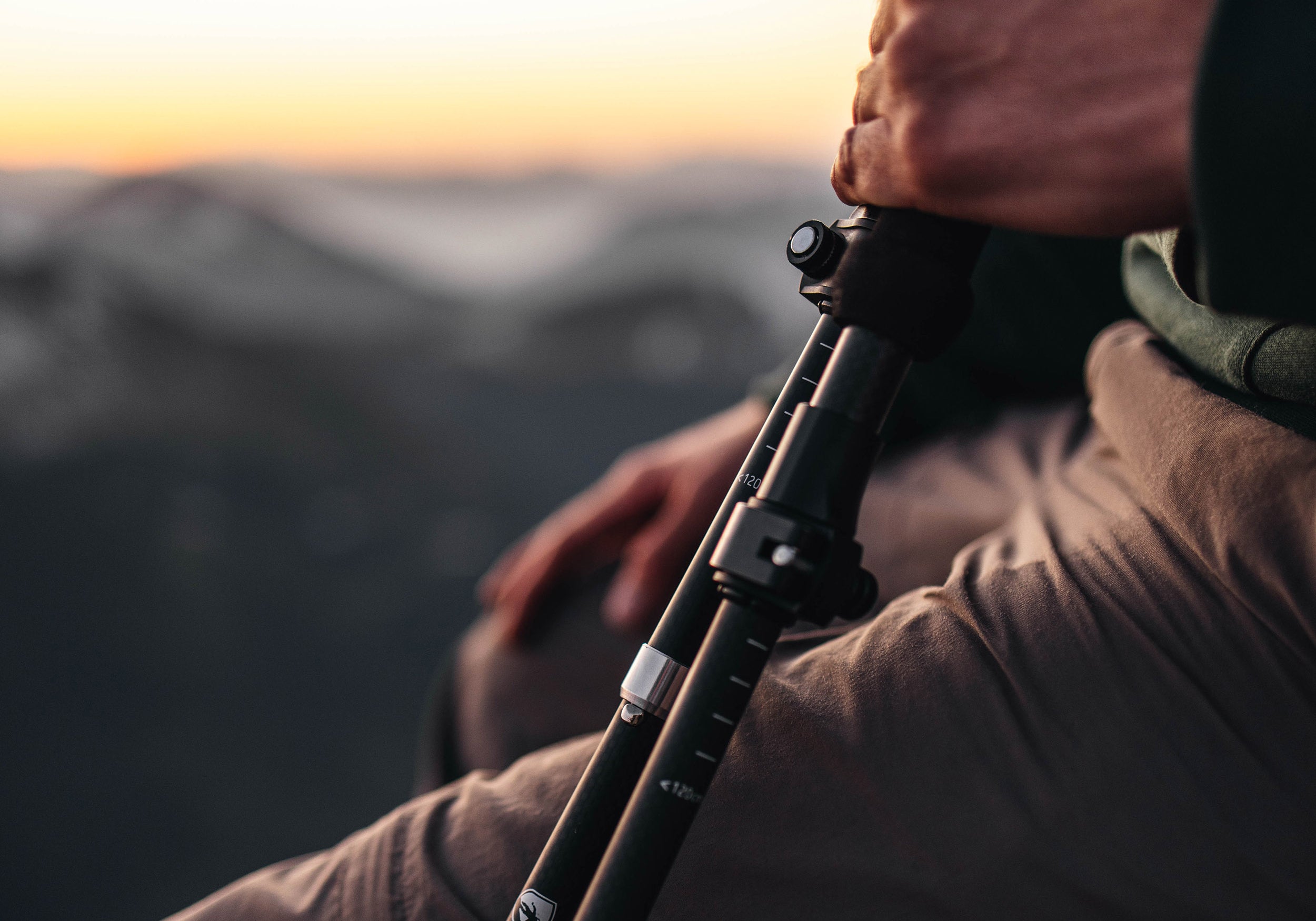
A common mistake is having trekking poles at the wrong length. Poles that are too short or too long unnecessarily strain the body. A rule of thumb is: stand upright with your elbows bent at a 90-degree angle and adjust the pole length so that your forearm is parallel to the ground.
For uphill sections, you can set the poles slightly shorter to facilitate forward propulsion. When going downhill, a slightly longer setting is recommended to optimally absorb your body weight.
2. The right grip and wrist strap
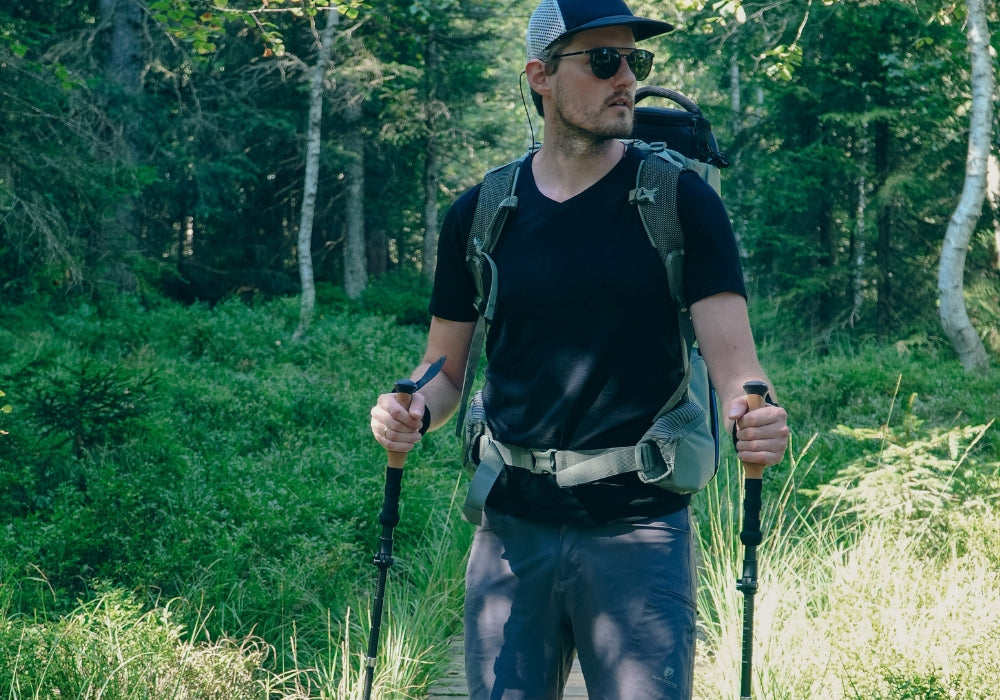
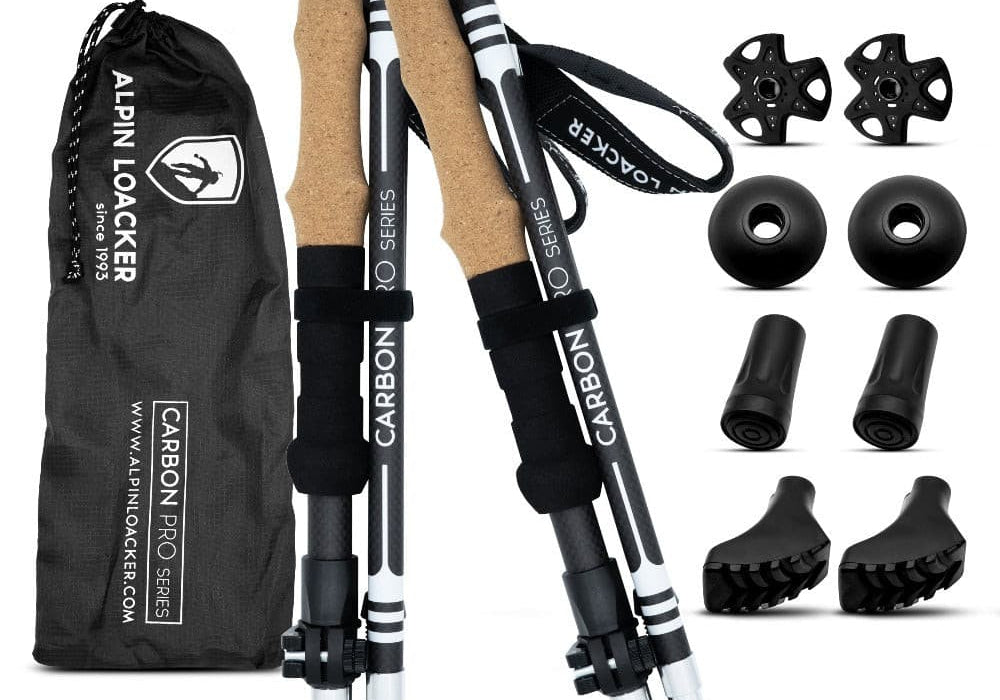
Most trekking poles have ergonomic grips made of cork, rubber, or foam. Hold the grip firmly but not tensely. The wrist strap should be placed around your hand so that you can partially transfer the weight to your palm. This reduces muscle tension in the forearm and ensures longer endurance on the hike.
3. Using the poles while walking
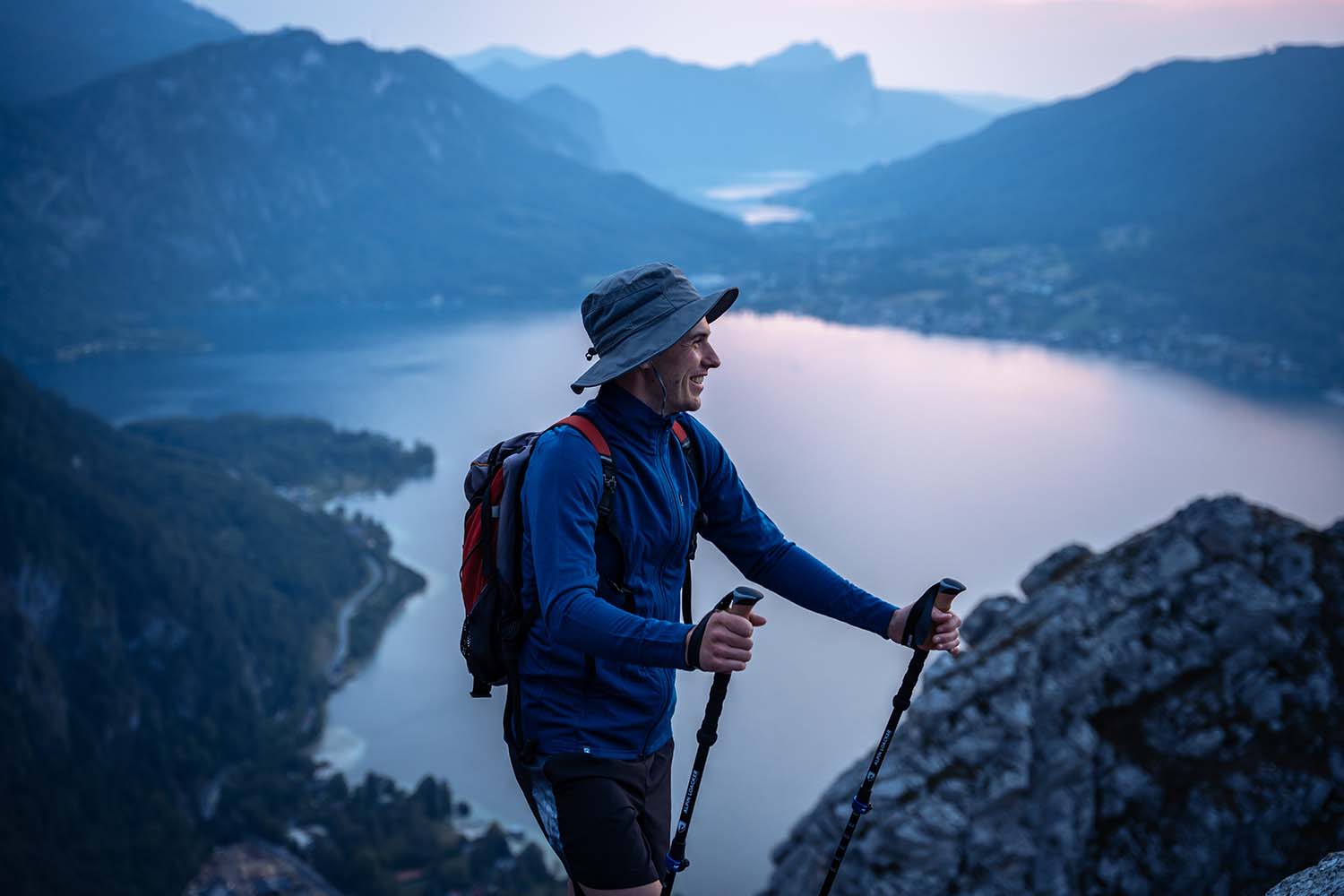
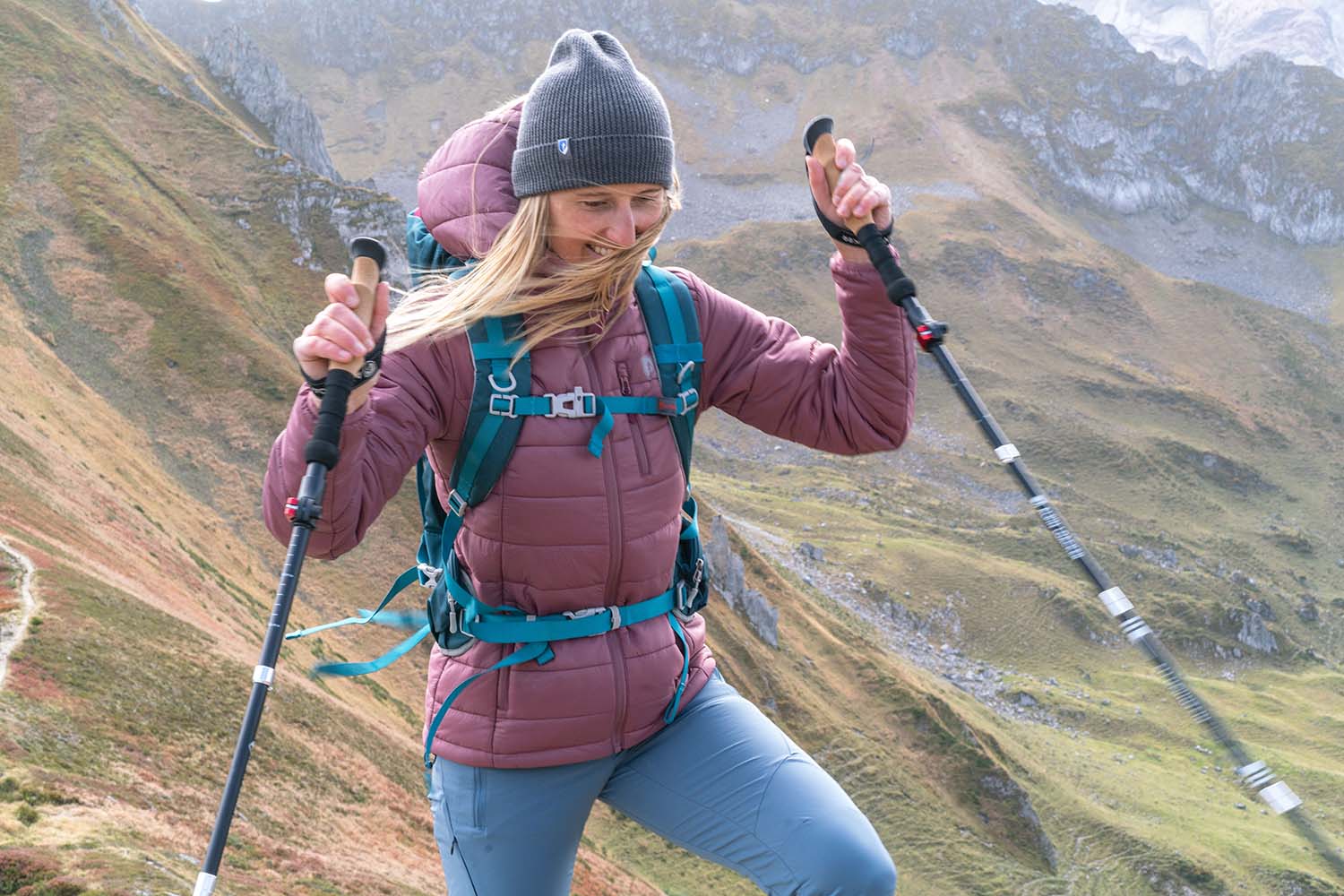
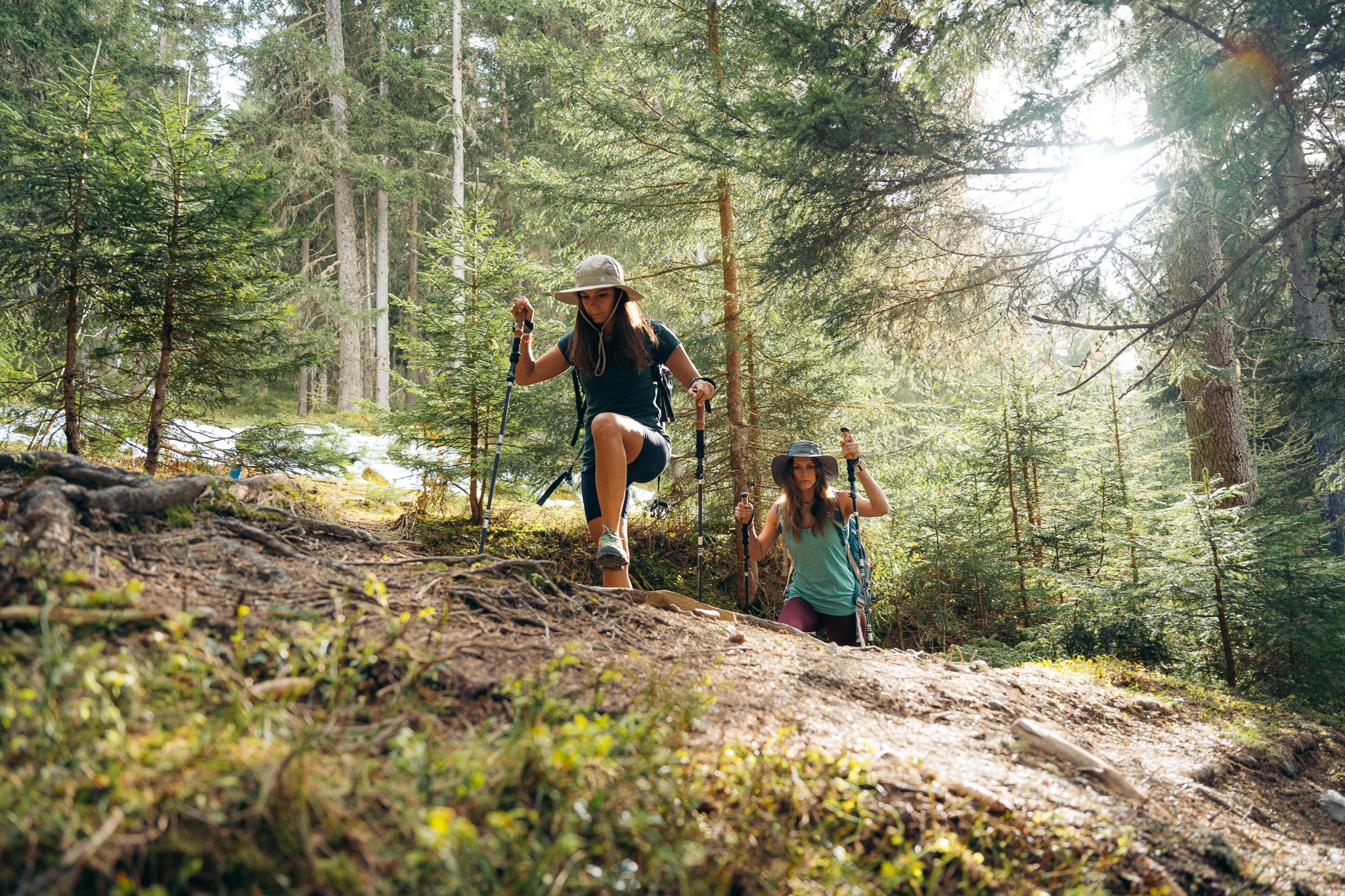
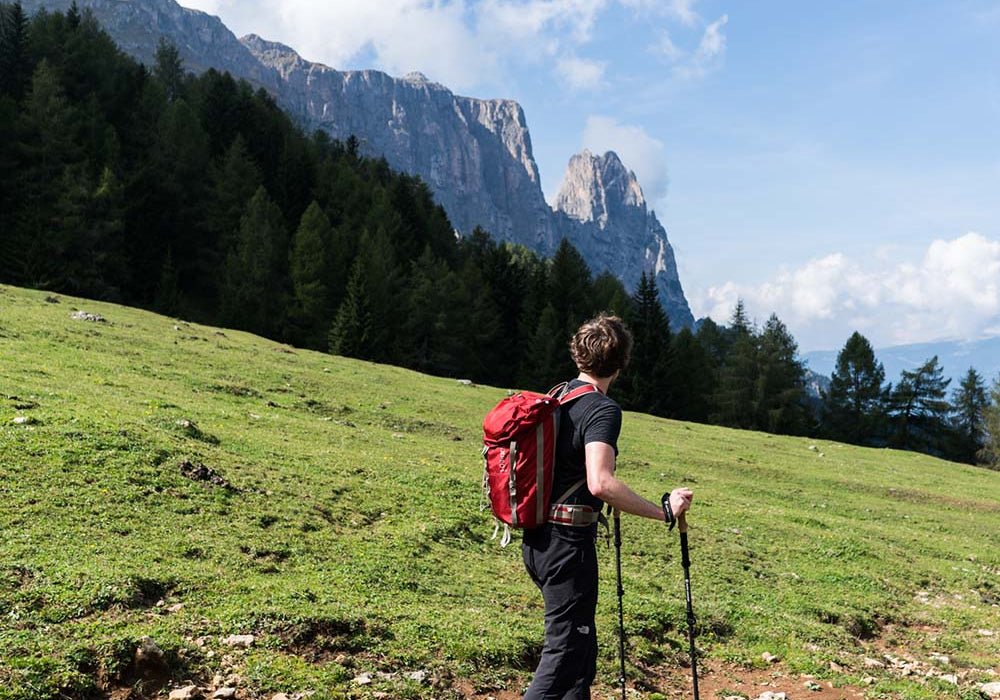
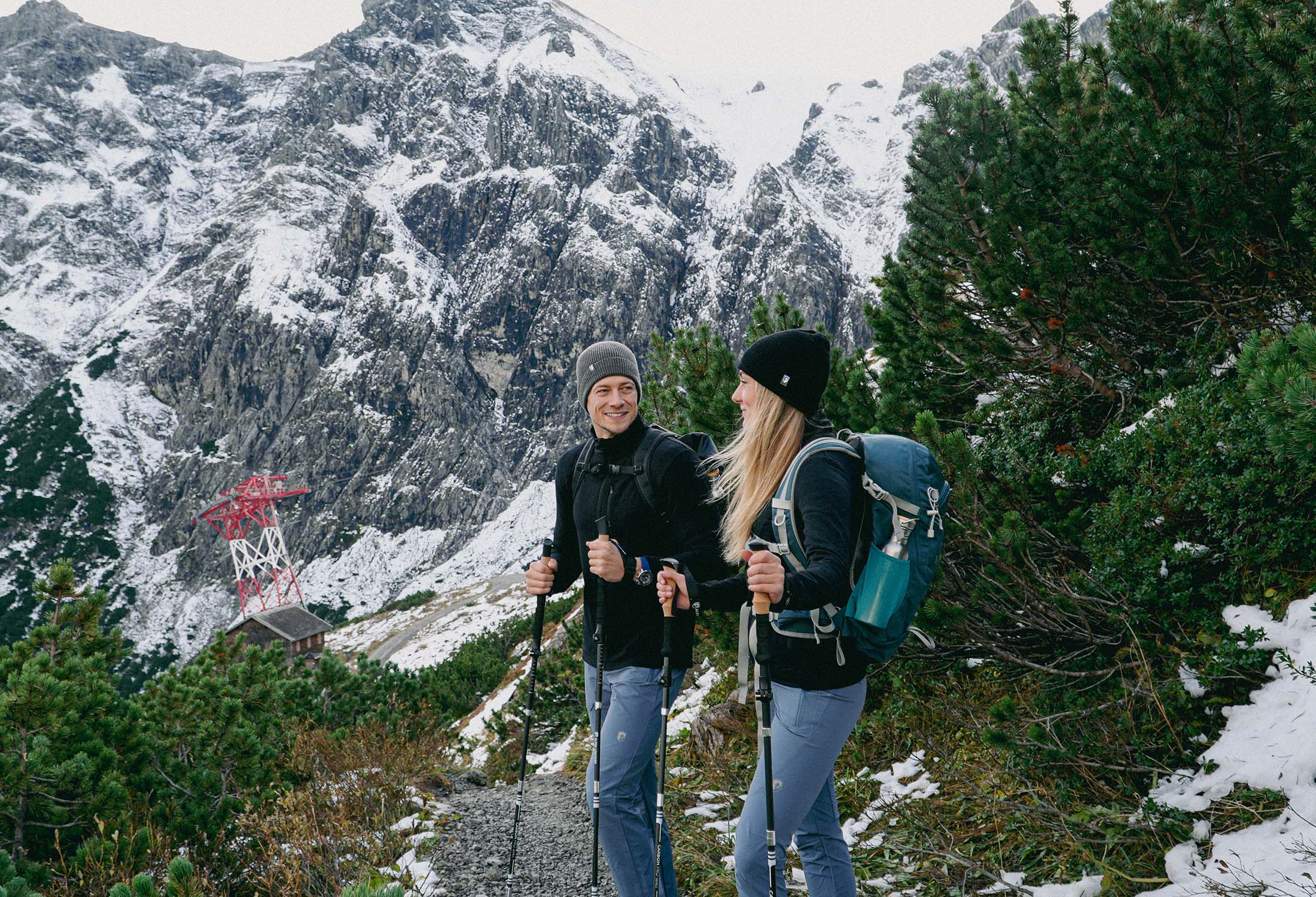
The rule of thumb when walking is: left foot, right pole; right foot, left pole. This diagonal technique supports the natural movement rhythm and provides more stability. Make sure to place the poles slightly forward and actively involve your upper body when pushing off. This relieves your legs and simultaneously increases the efficiency of your stride.
When climbing uphill, place the poles a bit further forward to support forward movement. When going downhill, hold the poles more to the side to stabilize your balance and prevent falls.
Posture and body balance
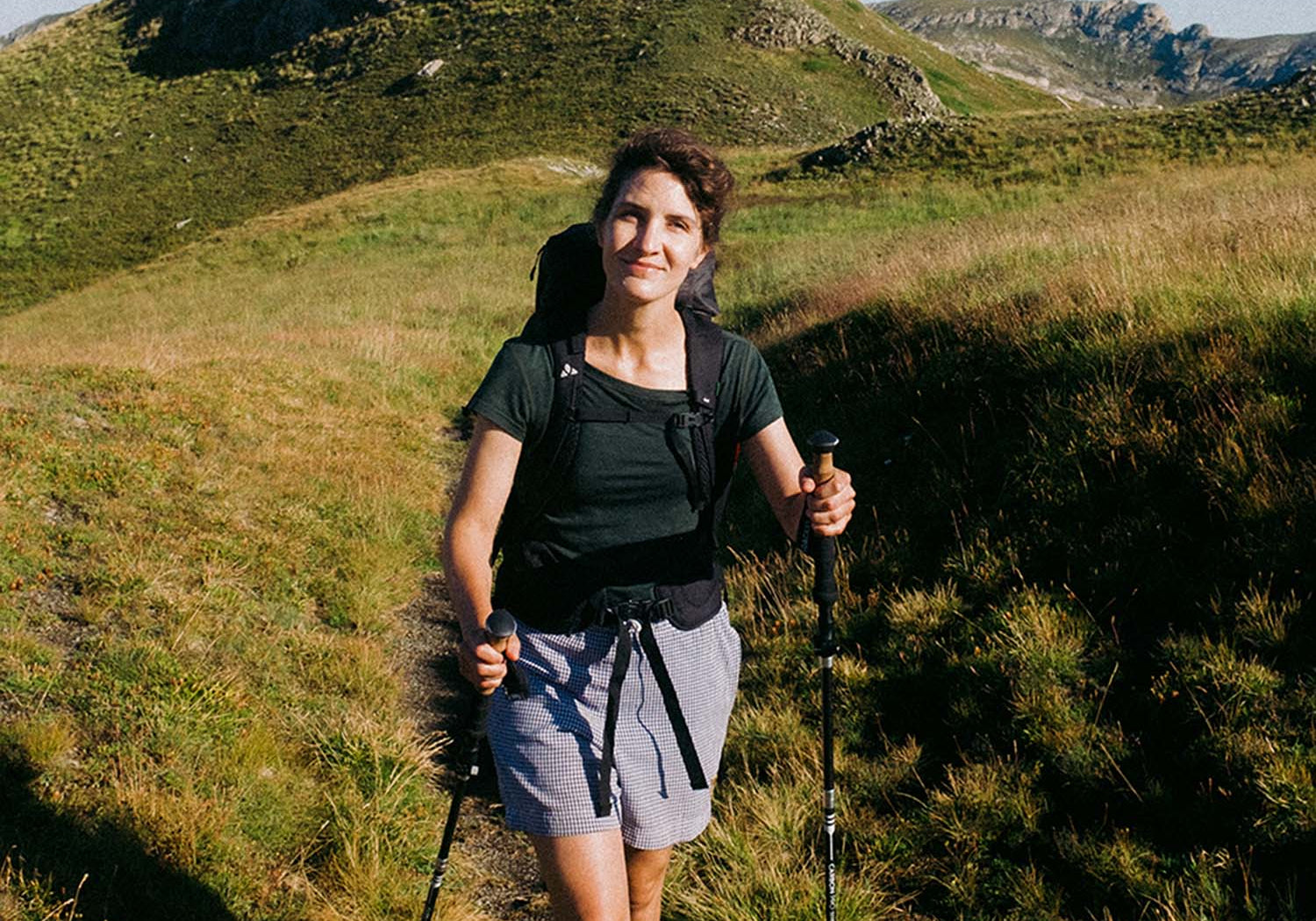
The right posture is essential to maximize the effect of using trekking poles correctly. Make sure to walk upright, keep your gaze forward, and lean your upper body slightly forward. The poles should be a natural extension of your arms and not hinder your steps.
A relaxed posture reduces the strain on your back muscles and prevents premature fatigue. Additionally, good posture promotes better breathing, which is especially important on longer tours or at higher altitudes.
Safety when using trekking poles
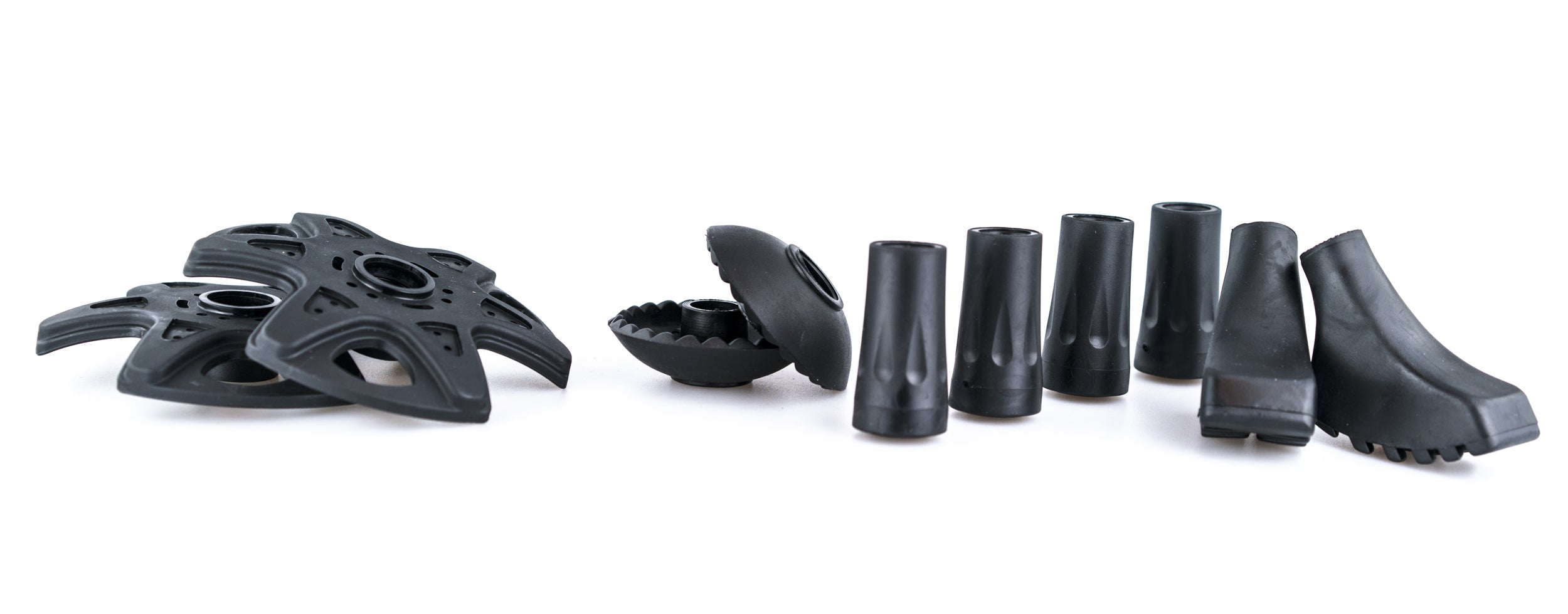
Safety should always come first. Trekking poles provide stability, but if used incorrectly, they can also become tripping hazards. Pay attention to the right pole tip for the terrain: rubber tips are suitable for asphalt or hard surfaces, while metal tips offer better grip on soft ground, gravel, or ice.
Regularly check that the poles are securely locked, especially with telescopic models. An unexpected collapse can not only interrupt your hike but also cause injuries.
Another important point is to stay aware of your surroundings. Place the poles deliberately to compensate for obstacles or uneven terrain, and avoid sudden movements that could lead to falls.
Practical tips for beginners
-
Practice first on flat terrain before choosing more challenging routes.
-
Choose trekking poles that fit your height and hiking style.
-
Wear gloves to avoid blisters on your hands.
-
Use the poles even during short breaks to support yourself and relieve your back.
-
Clean the pole tips after every hike, especially after mud or snow, to extend their lifespan.
Conclusion
Using trekking poles correctly can make your hikes significantly more enjoyable and safer. Using trekking poles correctly means adjusting the length individually, using the right grip technique, paying attention to your movement rhythm, and always prioritizing safety. With the right posture and technique, your hikes become more efficient, your joints are protected, and your balance improves.
So, if you plan to hike regularly, you shouldn’t miss out on the benefits of trekking poles. With a bit of practice and the right technique, longer distances become more relaxed, and your enjoyment of nature increases. For high-quality, reliable trekking poles, Alpin Loacker is a recommended choice, guaranteeing both safety and comfort on your hikes.