




Plastic-free lunch boxes are very trendy – especially among outdoor enthusiasts who want to transport their snacks in an environmentally conscious and healthy way. But lunch box made of aluminum or stainless steel: Which material is really better? We have thoroughly tested both options and show you what to look for when purchasing so you can find the perfect lunch box for your tours.
Lunch box made of aluminum or stainless steel: What's the difference?
The main difference between aluminum and stainless steel lies in the material composition. Aluminum has a lower density and is therefore particularly lightweight. However, the production of aluminum requires significantly more energy than stainless steel. Even though aluminum products seem more attractive at first glance due to lower acquisition costs, a second look is worthwhile.
Stainless steel, on the other hand, impresses with its durability, food safety, and sustainability. A stainless steel lunch box is robust, odor-neutral, and will accompany you for many years on your outdoor adventures – whether hiking, climbing, or touring with an ultralight backpack.
Expert tip: The use of aluminum can cause health problems because the metal can accumulate in food under certain conditions.
Aluminum vs. stainless steel: The pros and cons at a glance
To make an informed purchasing decision, a detailed look at both materials is worthwhile.
The aluminum lunch box under scrutiny
Aluminum lunch boxes are popular with outdoor enthusiasts due to their low price and light weight. However, critical voices are increasing: The German consumer center warns in their article "Aluminum in food and packaging widespread" of potential health damage to kidneys and bones. Severe developmental damage has also been associated with the material.
Advantages:
- Extremely lightweight
- Inexpensive to purchase
- Recyclable
Disadvantages:
- Can cause health damage because aluminum can accumulate in food and enter the body
- Not dishwasher safe
- Reacts sensitively to acidic or salty foods
The stainless steel lunch box under scrutiny
The stainless steel lunch box is becoming increasingly popular in the outdoor scene. No wonder – the sustainable material is absolutely harmless to humans and the environment. Unlike aluminum and plastic, stainless steel is not harmful to health – quite the opposite. Thanks to its antibacterial properties, a stainless steel lunch box is the ideal storage place for food. Bacteria don't stand a chance here! You'll also notice and taste this: a stainless steel lunch box is 100% odor- and taste-neutral.
Advantages:
- Durable and robust
- Withstands heat and cold
- Free of harmful substances and food-safe
- Dishwasher safe
- Antibacterial and odor-neutral
Disadvantages:
- More expensive than aluminum
- Limited color selection on most models
What to look for when buying a lunch box?
Regardless of the material, you should pay attention to some important points when purchasing a lunch box:
Size and compartments
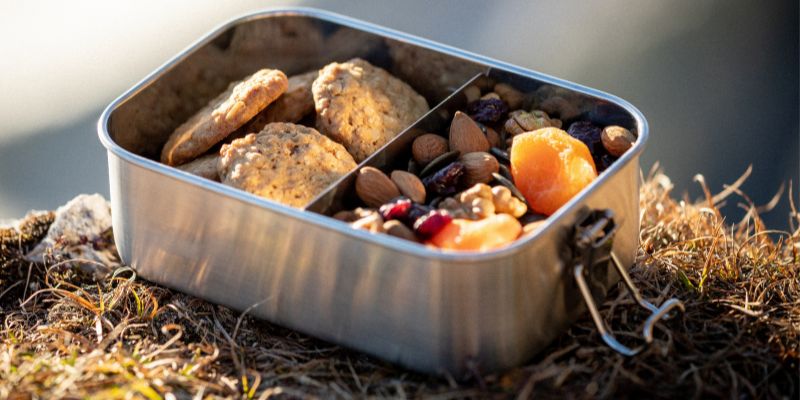
The size is crucial for practical use. If you want to use your lunch box on hikes, it should offer enough space for your snacks. Some models come with dividers. Sealed partition walls of a high-quality stainless steel lunch box ensure that you can transport different foods in one box – without them mixing. For a small hunger in between, round stainless steel containers are ideal because they are particularly space-saving. Especially on longer tours – for example when you're out with carbon trekking poles – every gram and every centimeter in your backpack counts.
Temperature and insulation
Do you want to enjoy warm meals on the road? Then you should use a leak-proof thermal lunch box. Your food stays warm in it for up to 12 hours. In summer, you can even keep your food cool in this special lunch box for up to 24 hours – ideal for hot days in the mountains or on multi-day tours with a lightweight backpack.
Closure and leak-proof design
The closure may seem insignificant at first glance – don't be fooled! It plays a major role in whether your lunch box is truly leak-proof. High-quality stainless steel lunch boxes feature robust clip closures with silicone seals that safely store even liquid foods like soups or sauces.
Our conclusion: Stainless steel is the more sustainable choice
If you value health, durability, and sustainability, a stainless steel lunch box is clearly the better choice. While it's slightly more expensive to purchase, it will last for years and is completely free of harmful substances. An aluminum lunch box may seem inexpensive at first, but health concerns and limited lifespan quickly outweigh this advantage.
For outdoor enthusiasts who also rely on high-quality equipment – such as merino functional underwear or an ultralight sleeping mat – the stainless steel version is the logical choice.
FAQ: Frequently asked questions about lunch boxes made of aluminum or stainless steel
Is an aluminum lunch box harmful to health?
Aluminum can transfer into food under certain conditions – especially when in contact with acidic or salty foods. According to consumer centers, the metal can accumulate in the body and potentially cause damage to kidneys and bones. If you want to be on the safe side, it's better to choose stainless steel.
Can I put a stainless steel lunch box in the dishwasher?
Yes, high-quality stainless steel lunch boxes are generally dishwasher safe. However, make sure whether the seals or closures need to be cleaned separately. Aluminum lunch boxes, on the other hand, should only be cleaned by hand as they can become dull in the dishwasher and coatings can peel off.
How long does a stainless steel lunch box keep my food warm?
A double-walled thermal stainless steel lunch box can keep food warm for up to 12 hours and cool for up to 24 hours. This makes it ideal for long outdoor tours, ski tours, or hikes where you want to enjoy a warm meal on the way.
Alpin Loacker Stainless Steel Lunch Boxes
Sustainable, durable, BPA-free — stainless steel lunch boxes for everyday outdoor use.
30-day return policy · Free shipping from €50